
Square Wave Maneuver
Description
Effectiveness
In the initial case series, the Square Wave maneuver had a 93% success rate, with 14/15 patients responding in one session; however, no comparative trials have been published, so further validation is needed (Yacovino et al., 2021).
History
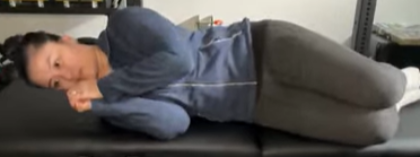
The Square Wave maneuver was published in 2021 by Yacovino, Zanotti, Roman, and Hain in Journal of Otology. Its name is descriptive, referring to the square-wave pattern created by the sequence of movements, rather than being named after a person. A key feature of the maneuver is its en bloc movement strategy, meaning the head and trunk are rotated together as one unit, which reduces the need for isolated cervical rotation during treatment

Dr. Dario Yacovino
Instructions
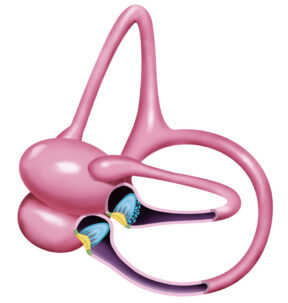
The purpose is to treat apogeotropic horizontal canal BPPV by repositioning otoconia to either resolve symptoms or convert the pattern to geotropic form of BPPV.
Related Pathology
Sources
- Kinne, B. L., Breuer, R. E., Fitkin, O. M., & Kelly, R. L. (2023). Interventions for apogeotropic horizontal canal benign paroxysmal positional vertigo: a systematic review. Physical Therapy Reviews, 28(1), 30–38. https://doi.org/10.1080/10833196.2022.2163082 https://www.tandfonline.com/doi/full/10.1080/10833196.2022.2163082
- Yacovino DA, Zanotti E, Roman K, Hain TC. Square wave manoeuvre for apogeotropic variant of horizontal canal benign paroxysmal positional vertigo in neck restricted patients. J Otol. 2021 Apr;16(2):65-70. doi: 10.1016/j.joto.2020.10.003. Epub 2020 Nov 5. PMID: 33777117; PMCID: PMC7985006. https://pubmed.ncbi.nlm.nih.gov/33777117/