
Forced Prolonged Positioning (Vannucchi)
Description
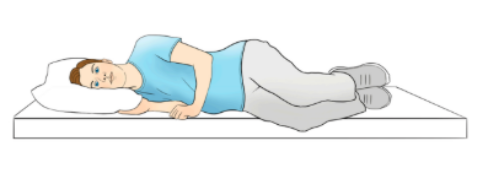
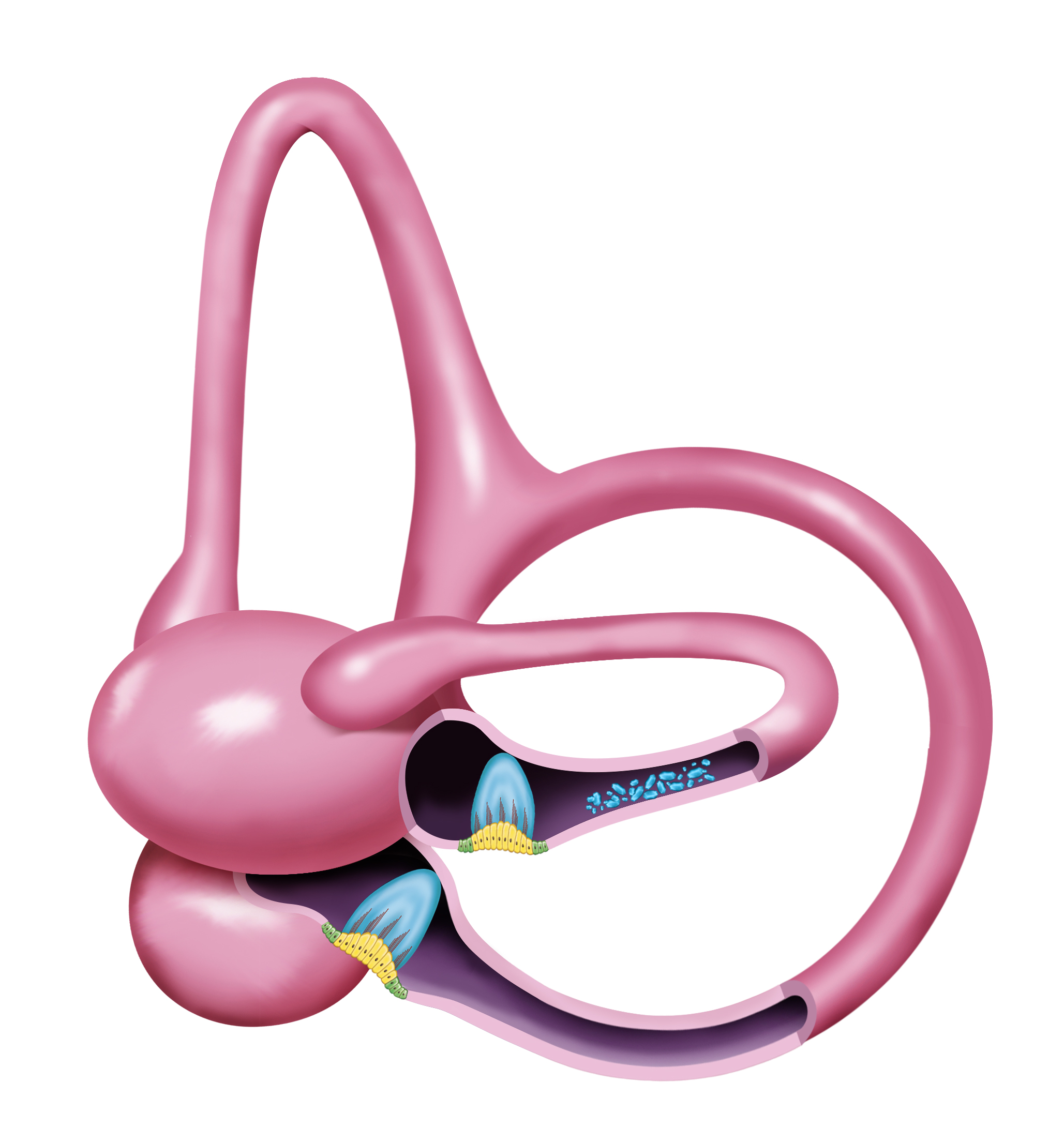
Forced prolonged positioning (FPP) is a low-velocity, gravity-assisted treatment option for horizontal canal BPPV. Unlike rapid canalith repositioning maneuvers, FPP relies on sustained side-lying positioning, often for several hours or overnight, to encourage otoconia to migrate through the horizontal canal and back toward the utricle.
For horizontal canalithiasis, the patient is positioned with the affected ear upward, typically lying on the unaffected side.
For horizontal cupulolithiasis, the patient may be positioned with the affected ear downward, with the goal of moving debris away from the cupular region and converting the pattern toward geotropic BPPV.
Because the therapeutic position depends on accurate identification of the involved side and variant, FPP should be clinician-directed. It may be particularly useful when brisk maneuvers are poorly tolerated, such as in patients with significant nausea, frailty, limited mobility, or medical complexity.
Effectiveness
History
Forced prolonged positioning grew out of the Italian neuro-otology work that helped establish horizontal canal BPPV as a distinct clinical subtype. In 1989, Pagnini, Nuti, and Vannucchi described 15 cases marked by intense positional vertigo, direction-changing horizontal nystagmus, and faster spontaneous resolution than typical posterior canal BPPV. The treatment concept later appeared in Italian ENT proceedings as posizione liberatoria coatta before Vannucchi, Giannoni, and Pagnini published the formal journal description of FPP in 1997 (Vannucchi et al., 1997).

Dr. Paolo Vannuchi
Instructions
Geotropic (canalithiasis)
- Confirm horizontal canal BPPV and identify the affected side.
- Have the patient lie on their back.
- Have the patient roll onto the unaffected side.
- Keep the head supported in neutral, with the affected ear facing up.
- Maintain this position for about 12 hours, often overnight.
- Reassess positional nystagmus and symptoms afterward and repeat if necessary.
Apo/Ageotropic (cupulolithiasis)
- Confirm apogeotropic horizontal canal BPPV and identify the affected side.
- Have the patient lie on their back.
- Have the patient roll onto the affected side.
- Keep the head supported in neutral, with the affected ear facing down.
- Maintain this position for about 12 hours, often overnight.
- Reassess positional nystagmus and symptoms afterward and repeat if necessary.
Related Pathology
Sources
- Han K, Lee J, Shin JE, Kim CH. Treatment Efficacy of Forced Prolonged Position After Cupulolith Repositioning Maneuver in Apogeotropic HSCC BPPV. Ear Nose Throat Journal. 2024;103(4):NP234-NP240. doi:10.1177/01455613211038274. https://journals.sagepub.com/doi/10.1177/01455613211038274
- Kinne, B. L., Anderson, H. J., Cremerius, B. C., & Staltmanis, S. M. (2023). Effectiveness of forced prolonged position for geotropic horizontal canal BPPV: a systematic review. Physical Therapy Reviews, 28(3), 188–194. https://doi.org/10.1080/10833196.2023.2258714 https://www.tandfonline.com/doi/full/10.1080/10833196.2023.2258714
- Mandalà M, Califano L, Casani AP, Faralli M, Marcelli V, Neri G, Pecci R, Scasso F, Scotto di Santillo L, Vannucchi P, Giannoni B, Dasgupta S, Bindi I, Salerni L, Nuti D. Double-Blind Randomized Trial on the Efficacy of the Forced Prolonged Position for Treatment of Lateral Canal Benign Paroxysmal Positional Vertigo. Laryngoscope. 2021 Apr;131(4):E1296-E1300. doi: 10.1002/lary.28981. Epub 2020 Aug 21. PMID: 32822510. https://pubmed.ncbi.nlm.nih.gov/32822510/
-
Vannucchi P, Giannoni B, Pagnini P. Treatment of Horizontal Semicircular Canal Benign Paroxysmal Positional Vertigo. Journal of Vestibular Research. 1997;7(1):1-6. doi:10.3233/VES-1997-7101