
Meniere’s Disease
What is Meniere’s Disease?
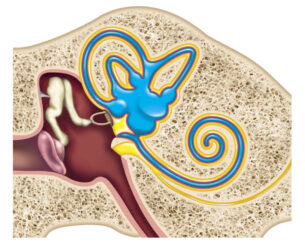
“Meniere’s disease is a chronic, relapsing, and remitting inner ear disorder characterized by episodic vertigo, fluctuating hearing loss, tinnitus, and aural fullness” (Basura et al., 2020). In other words, it can be thought of as a “cranky ear” — a peripheral inner ear disorder caused by intermittent fluid buildup that affects the organs of hearing (cochlea) and balance (vestibular system).
History
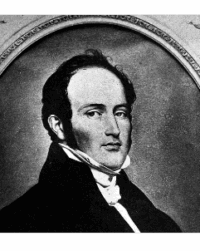
Meniere’s disease was named after Prosper Ménière, a French physician who, in 1861, recognized that the triad of vertigo, hearing loss, and tinnitus came from a problem in the inner ear—a major shift from the previous belief that these symptoms were neurological.
Over the 20th century, diagnostic criteria evolved through the AAO–HNS (1972, 1995) and Bárány Society (2015) consensus statements, defining “definite” and “probable” disease. These criteria emphasize that diagnosis should be made after excluding other vestibular or central causes such as vestibular migraine.
Dr. Prosper Ménière
Etiology
The exact cause of Meniere’s is still not fully understood, but research shows that it develops from a combination of inner ear fluid imbalance and multiple contributing factors involving the immune system, circulation, genetics, and possibly infections or inflammation (Basura et al., 2020; Chari et al., 2025; Pyykkö et al., 2024).

1. Main Mechanism – Endolymphatic Hydrops
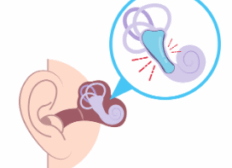
Most studies agree that Meniere’s disease is associated with endolymphatic hydrops—an excess of inner ear fluid (endolymph) within the cochlear and vestibular portions of the inner ear, collectively known as the labyrinth. When the pressure increases, it may temporarily disrupt the delicate membranes that separate fluid compartments, triggering episodes of vertigo, hearing loss, tinnitus, and ear fullness (Basura et al., 2020).
2. Multifactorial Causes
Modern understanding describes Meniere’s as a multifactorial or variable disorder—not one single disease, but a condition with several possible contributing causes that lead to a similar result: endolymphatic hydrops (Chari et al., 2025).
Potential contributors include:
-
🧬 Genetic factors:
Some people may inherit a tendency toward fluid imbalance or altered ion transport in the inner ear (Chari et al., 2025). -
🩸 Vascular factors:
Poor microcirculation or changes in blood flow to the inner ear can affect how fluids are absorbed or drained (Pyykkö et al., 2024). -
🧫 Immune and inflammatory processes:
Autoimmune reactions or chronic inflammation may damage structures that help regulate inner ear pressure (Pyykkö et al., 2024). -
🌿 Environmental or infectious triggers:
Viral infections, allergies, or even stress may act as triggers that worsen symptoms in people who are already susceptible (Chari et al., 2025).
Prevalence
Meniere’s affects approximately 50–200 per 100,000 adults and most often presents between 40 and 60 years of age (Basura et al., 2020). Prevalence varies across studies because of differing diagnostic criteria and population methods. The condition shows a slight female predominance in several epidemiologic analyses (Basura et al., 2020; Chari et al., 2025). It typically begins as unilateral, but bilateral involvement develops in about 20–30% of patients during long-term follow-up (Basura et al., 2020; Pyykkö et al., 2024). Although uncommon, it has a notable impact on quality of life due to recurrent attacks and progressive hearing loss (Chari et al., 2025; Özgür and İler, 2025).
Diagnostic Criteria for Meniere’s Disease – Bárány Society
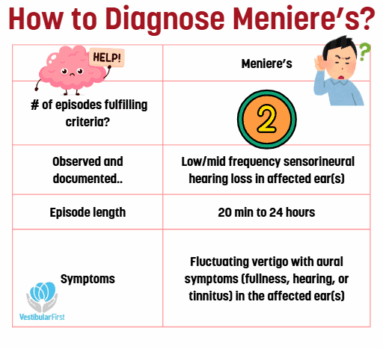
A. Two or more spontaneous episodes of vertigo, each lasting 20 minutes to 12 hours.
B. Audiometrically documented low- to medium frequency sensorineural hearing loss in one ear, defining the affected ear on at least one occasion before, during or after one of the episodes of vertigo.
C. Fluctuating aural symptoms (hearing, tinnitus or fullness) in the affected ear.
D. Not better accounted for by another vestibular diagnosis.
Diagnostic Criteria for probable Meniere’s Disease – Bárány Society
A. Two or more episodes of vertigo or dizziness, each lasting 20 minutes to 24 hours.
B. Fluctuating aural symptoms (hearing, tinnitus or fullness) in the affected ear.
D. Not better accounted for by another vestibular diagnosis.
Patient Reported Symptoms
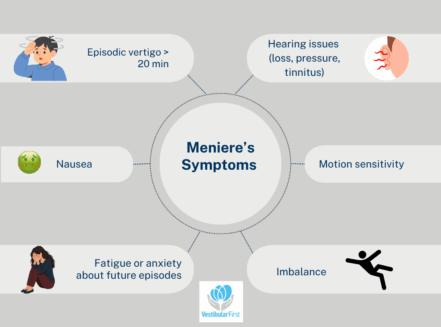
Patients with Meniere’s disease commonly describe a pattern of recurrent attacks that combine symptoms affecting both hearing and balance. These episodes typically include spinning vertigo lasting from 20 minutes to several hours, often accompanied by nausea, imbalance, and motion sensitivity. Many patients report a sensation of fullness or pressure in one ear, along with fluctuating hearing loss that may improve between attacks but gradually worsens over time. Tinnitus—often described as a roaring, ringing, or humming sound—is also frequent and can intensify during vertigo episodes.
Between attacks, individuals may experience lingering unsteadiness, fatigue, or anxiety about future episodes. In later stages, vertigo may decrease in frequency, while permanent hearing loss and chronic imbalance become more prominent (Basura et al., 2020; Pyykkö et al., 2024; Chari et al., 2025).
Clinical Findings
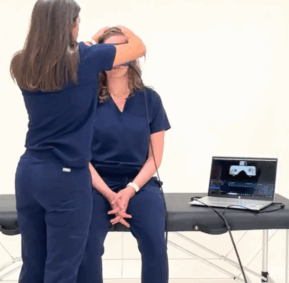
Bedside Vestibular-Ocular Testing
-
Oculomotor tests: Typically normal, consistent with a peripheral vestibular disorder rather than central pathology (Basura et al., 2020).
-
Head impulse test (HIT): May be normal early in the disease when high-frequency canal function is preserved (Mavrodiev et al., 2024; Cheon et al., 2025).
-
Later stages: Between attacks, findings can resemble unilateral vestibulopathy on the affected side as cumulative vestibular loss develops (Basura et al., 2020; Mavrodiev et al., 2024).
Hearing Tests:
- Pure-tone audiogram: Fluctuating low-frequency sensorineural loss (SNHL) that progresses to flat, permanent SNHL over time (Basura et al., 2020; Pyykkö et al., 2024).
Vestibular Function Testing (not necessary for diagnosis):
-
Caloric–vHIT dissociation: The classic finding is reduced caloric response with normal horizontal vHIT gain (≥0.8), reflecting low-frequency canal loss from endolymphatic hydrops with preserved high-frequency function (Mavrodiev et al., 2024; Cheon et al., 2025).
-
Caloric testing: Abnormal caloric responses occur in ~60–70% of affected ears, showing low-frequency horizontal canal dysfunction (Mavrodiev et al., 2024; Cheon et al., 2025).
-
vHIT: Usually normal in early or unilateral disease; may become abnormal with advanced or bilateral involvement (Mavrodiev et al., 2024; Cheon et al., 2025).
-
VEMP: Reduced or absent responses are common, reflecting saccular or utricular hydrops; asymmetry supports diagnosis (Lopez-Escamez et al., 2015; Taylor et al., 2022; Pyykkö et al., 2024).
Balance and Gait Findings
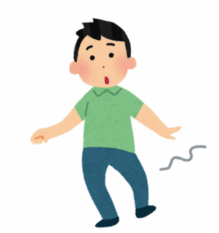
- During attacks: Patients experience marked vertigo with pronounced imbalance that can significantly impair safe ambulation (Basura et al., 2020; Chari et al., 2025).
- Between attacks: Persistent unsteadiness and motion sensitivity are common over the disease course; symptom burden and the need for comprehensive management of imbalance increase with disease duration (Pyykkö et al., 2024; Chari et al., 2025).
Treatment
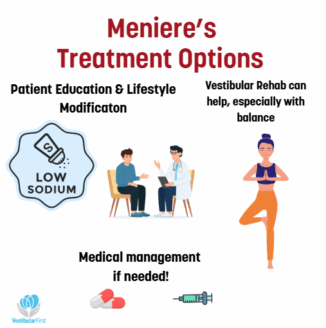
1. First-Line: Lifestyle & Medical Management
-
Patient education: Explain the fluctuating course, potential triggers, and long-term management goals of the disease (Basura et al., 2020).
-
Diet and lifestyle: Encourage dietary and behavioral modifications that may reduce attacks—commonly a low-sodium diet (~1.5–2 g/day), adequate hydration, and limiting caffeine and alcohol (Basura et al., 2020; Chari et al., 2025; Pyykkö et al., 2024).
-
Maintenance therapy: Diuretics or betahistine may be offered for prevention and reduction of vertigo frequency (Basura et al., 2020; Chari et al., 2025).
-
Acute attacks: May use short-term vestibular suppressants (e.g., meclizine, diazepam) and antiemetics for symptom relief during attacks only (Basura et al., 2020).
2. Second-Line: Intratympanic Therapy (medication placed through the eardrum into the middle ear)
-
Corticosteroids (dexamethasone or methylprednisolone): An option when noninvasive therapy fails; aim is vertigo reduction with better hearing preservation relative to ablative options. Meta-analysis shows better hearing outcomes vs gentamicin (Basura et al., 2020; Wu et al., 2024.) .
-
Gentamicin: Reserved for refractory or disabling vertigo. Offers greater vertigo control than steroids but carries a risk of vestibular hypofunction and hearing loss (Basura et al., 2020; Wu et al., 2024).
-
Rehabilitation after gentamicin: Vestibular rehabilitation is recommended to support central compensation after ablative therapy (Basura et al., 2020); a randomized trial evaluating this specifically after intratympanic gentamicin is underway (Tong et al., 2025).
3. Adjunctive/Supportive Options
-
Vestibular rehabilitation therapy (VRT): Shown to improve balance, gait, and functional stability in Meniere’s disease and in patients with residual imbalance after medical or intratympanic treatment (van Esch et al., 2017; Özgür and İler, 2025).
-
Psychological and migraine management: Anxiety, stress, and migraine overlap can worsen vestibular symptoms; addressing these comorbidities may improve overall outcomes (Chari et al., 2025).
-
SNRI (venlafaxine): A recent randomized clinical trial found that venlafaxine reduced vertigo frequency and severity compared with placebo, but evidence is still limited and it is not part of current guideline recommendations (Rizk et al., 2024).
-
Acupuncture: A 2024 systematic review and meta-analysis found moderate evidence supporting acupuncture for symptom reduction, with a good safety profile as a complementary therapy (Tang et al., 2024).

To Learn More — Check Out These Meniere’s Disease Resources
- Vestibular First’s Online, self-paced CEU courses:
- Watch related Journal Clubs:

References
- Basura GJ, Adams ME, Monfared A, Schwartz SR, Antonelli PJ, Burkard R, Bush ML, Bykowski J, Colandrea M, Derebery J, Kelly EA, Kerber KA, Koopman CF, Kuch AA, Marcolini E, McKinnon BJ, Ruckenstein MJ, Valenzuela CV, Vosooney A, Walsh SA, Nnacheta LC, Dhepyasuwan N, Buchanan EM. Clinical Practice Guideline: Ménière’s Disease. Otolaryngol Head Neck Surg. 2020 Apr;162(2_suppl):S1-S55. doi: 10.1177/0194599820909438. PMID: 32267799. https://pubmed.ncbi.nlm.nih.gov/32267799/
- Chari DA, Bose A, Ramirez K, Robles-Bolivar P, Lin KY, Juliano AF, Rauch SD, Eckhard AH. A modern conceptual framework for study and treatment of Meniere’s disease. Front Neurol. 2025 May 16;16:1607435. doi: 10.3389/fneur.2025.1607435. PMID: 40452761; PMCID: PMC12122318. https://www.frontiersin.org/journals/neurology/articles/10.3389/fneur.2025.1607435/full
- Cheon TU, Park JH, Lee JS, Bae SH. Defining diagnostic thresholds for dissociation between caloric test and vHIT in Ménière’s disease. Front Neurol. 2025 Aug 19;16:1651714. doi: 10.3389/fneur.2025.1651714. PMID: 40904823; PMCID: PMC12402726. https://www.frontiersin.org/journals/neurology/articles/10.3389/fneur.2025.1651714/full
- Özgür, Uğur Embiye MD*; İler, İrem PhD†. The Effectiveness of Vestibular Rehabilitation Including Virtual Reality Therapy in Balance Loss Due to Ménière Disease. The Journal of Craniofacial Surgery ():10.1097/SCS.0000000000011634, August 6, 2025. | DOI: 10.1097/SCS.0000000000011634 https://journals.lww.com/jcraniofacialsurgery/abstract/9900/the_effectiveness_of_vestibular_rehabilitation.3027.aspx
- Mavrodiev V, Strupp M, Vinck AS, van de Berg R, Lehner L. The dissociation between pathological caloric testing and a normal video head impulse test helps differentiate between Menière’s disease, vestibular migraine, and other vestibular disorders: a confirmatory study in a large cohort of 2,101 patients. Front Neurol. 2024 Aug 14;15:1449261. doi: 10.3389/fneur.2024.1449261. PMID: 39206283; PMCID: PMC11350975. https://www.frontiersin.org/journals/neurology/articles/10.3389/fneur.2024.1449261/full
- Pyykkö I, Zou J, Vetkas N. Changes in symptom pattern in Meniere’s disease by duration: the need for comprehensive management. Front Neurol. 2024 Nov 8;15:1496384. doi: 10.3389/fneur.2024.1496384. PMID: 39582681; PMCID: PMC11581947. https://pubmed.ncbi.nlm.nih.gov/39582681/
- Rizk HMonaghan NPShah S, et al. Efficacy of a Serotonin-Norepinephrine Reuptake Inhibitor as a Treatment for Meniere Disease: A Randomized Clinical Trial. JAMA Otolaryngol Head Neck Surg. 2024;150(11):935–942. doi:10.1001/jamaoto.2024.2241 https://jamanetwork.com/journals/jamaotolaryngology/fullarticle/2822947
- Tang M, Li Y, Lu M, Zhang T, Ge Y, Han J, Tang J, Chen Z. Efficacy and safety of acupuncture in the treatment of Meniere’s disease: a systematic review and meta-analysis. Front Med (Lausanne). 2024 Dec 11;11:1463821. doi: 10.3389/fmed.2024.1463821. PMID: 39722819; PMCID: PMC11669254. https://www.frontiersin.org/journals/medicine/articles/10.3389/fmed.2024.1463821/full
- van Esch BF, van der Scheer-Horst ES, van der Zaag-Loonen HJ, Bruintjes TD, van Benthem PP. The Effect of Vestibular Rehabilitation in Patients with Ménière’s Disease. Otolaryngol Head Neck Surg. 2017 Mar;156(3):426-434. doi: 10.1177/0194599816678386. Epub 2016 Nov 14. PMID: 28112027. https://pubmed.ncbi.nlm.nih.gov/28112027/
- Wu X, Shui J, Liu C, Wu X, Yu Y, Wang H, Yan C. Comparative efficacy of intratympanic gentamicin and intratympanic corticosteroid in the treatment of Meniere’s disease: a systematic review and meta-analysis. Front Neurol. 2024 Sep 12;15:1471010. doi: 10.3389/fneur.2024.1471010. PMID: 39329015; PMCID: PMC11424416. https://pmc.ncbi.nlm.nih.gov/articles/PMC11424416/