
CEREBELLAR STROKE

What is a Cerebellar Stroke?
A cerebellar stroke occurs when blood flow to part of the cerebellum is interrupted, either by blockage (ischemia) or bleeding (hemorrhage).

History
Cerebellar stroke was first described in the 1800s, including Robert Dunn’s 1849 clinicopathologic report of cerebellar apoplexy, which helped establish that vascular injury to the cerebellum could produce sudden neurological decline (Manto et al., 2021). For many years, diagnosing cerebellar stroke in living patients remained difficult because symptoms closely resembled peripheral vestibular disorders, leading to frequent misclassification (David et al., 2023). With the introduction of CT and especially MRI, clinicians became able to identify infarcts in the PICA, AICA, and SCA territories and recognize characteristic patterns such as audiovestibular loss in AICA strokes (Ioannides et al., 2024; Lee et al., 2009; Kim et al., 2024). Modern emergency-care studies show that pairing MRI with structured bedside exams has further improved early differentiation between cerebellar stroke and peripheral vertigo (Kaski, 2025; Vanni et al., 2024).
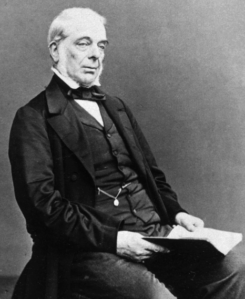
Dr. Robert Dunn
Etiology
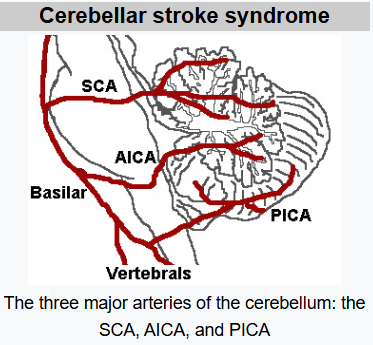
The cerebellum receives blood supply from three primary arteries — the superior cerebellar artery (SCA), the anterior inferior cerebellar artery (AICA), and the posterior inferior cerebellar artery (PICA), all branches of the vertebrobasilar (posterior circulation) arterial system (Ioannides et al., 2024). Occlusion or rupture in any of these arteries can compromise cerebellar perfusion and lead to a stroke. Because these vessels are vulnerable to a range of vascular pathologies, cerebellar stroke can arise from several mechanisms.
1. Large-Artery Atherosclerosis 🫀
Plaque buildup in the vertebral or basilar arteries can cause local thrombosis or reduced flow, or send emboli (blood clots) into SCA, AICA, or PICA. This is one of the most common mechanisms of cerebellar ischemia
(Ahmed et al., 2023; Datar , 2014; Ioannides et al.,2024; Jensen et al., 2005).
2. Cardioembolism ❤️
Clots originating from the heart — especially in atrial fibrillation, structural heart disease, or recent myocardial infarction — can lodge in cerebellar arteries (Ahmed et al., 2023; Datar et al., 2014; Ioannides et al., 2024).
3. Artery-to-Artery Embolism 🔀🩸
Emboli from atherosclerotic plaque in the proximal vertebral or basilar arteries can travel distally to cerebellar branches (Datar et al., 2014; Ioannides et al., 2024; Yu et al., 2022).
4. Vertebral or Cerebellar Artery Dissection ⚡️🧵
A tear in the vertebral or cerebellar artery can impair flow or generate emboli. Dissection may follow trauma or occur spontaneously, particularly in younger patients (Datar et al., 2014; Ioannides et al., 2024; Jensen et al., 2005).
5. Small-Vessel Disease (Microangiopathy) 🌡️🩺
Chronic hypertension and diabetes can damage small perforating cerebellar vessels, causing lacunar-type cerebellar infarcts (Datar et al., 2014; Ioannides et al., 2024; Yu et al., 2022).
6. Less Common Causes 🧬🧪
Includes vasculitis, hypercoagulable states, non-atherosclerotic arteriopathies, and rare structural vascular disorders (Datar et al., 2014; Ioannides et al., 2024; Kaski et al., 2025).
8. Hemorrhagic Cerebellar Stroke 💥🧠
Major causes include:
-
Chronic hypertension, the most common etiology of spontaneous cerebellar hemorrhage
(Shu et al., 2024; Jensen et al., 2005). -
Vascular malformations, including AVMs and aneurysms (Shu et al., 2024).
-
Coagulopathy or anticoagulant use, which increases risk of posterior fossa bleeding
(Jensen et al., 2005; Shu et al., 2024).
Because the posterior fossa is confined, hemorrhages can cause rapid brainstem compression.
Prevalence
Cerebellar infarction accounts for about 2–3% of all ischemic strokes (Ioannides et al., 2024; Datar and Rabinstein, 2014), while cerebellar hemorrhage represents approximately 10–15% of intracerebral hemorrhages (Jensen and St. Louis, 2005; Shu et al., 2024). Among infarct territories, PICA is most commonly involved, followed by SCA, with AICA infarction considered rare (Ahmed et al., 2023; Ioannides et al., 2024; Lee et al., 2009; Kim et al., 2024). Multiple small cerebellar infarcts occur in roughly 7–10% of cases (Yu et al., 2022), and misdiagnosis remains frequent, with about 35% initially missed in emergency settings (David et al., 2023).

How to Diagnose Cerebellar Stoke
Symptoms may resemble benign vestibular disorders, and early imaging can be misleading. Accurate diagnosis requires integrating clinical features, bedside oculomotor and gait testing, and targeted imaging, consistent with posterior circulation stroke literature and the GRACE-3 emergency dizziness guidelines (Edlow et al., 2023; David et al., 2023; Ahmed et al., 2023; Kaski, 2025; Ioannides et al., 2024).

1. Clinical recognition — Acute Vestibular Syndrome or focal cerebellar signs
Cerebellar infarction may present with sudden vertigo, nausea/vomiting, gait ataxia, and occasionally headache or dysarthria (Datar & Rabinstein, 2014; Ioannides et al., 2024). Severe imbalance or inability to walk independently strongly favors a central lesion over peripheral vestibulopathy (Ioannides et al., 2024). Suspicion increases when vascular risk factors are present (Ahmed et al., 2023). Common vascular risk factors include hypertension, diabetes, hyperlipidemia, atrial fibrillation, smoking, older age, and prior cerebrovascular disease.

2. Bedside vestibulo-ocular testing for acute dizziness (HINTS / HINTS-plus / STANDING)
Supported by: GRACE-3 (Edlow et al., 2023); Qiu et al., 2022; Kaski, 2025; Vanni et al., 2014; Vanni et al., 2024
For patients with Acute Vestibular Syndrome (AVS)—continuous vertigo/dizziness with nausea, nystagmus, and gait disturbance—HINTS is the most sensitive bedside tool for detecting posterior circulation stroke, including cerebellar infarction. GRACE-3 emphasizes that early CT and even early MRI may be falsely negative, so bedside vestibulo-ocular findings must guide early diagnostic suspicion.
HINTS Components: consists of three eye-movement tests:
- Head-Impulse Test (HIT): Evaluates the vestibulo-ocular reflex.
-
Peripheral: abnormal HIT with a corrective saccade.
-
Central: normal HIT despite severe vertigo — a key stroke marker (Edlow et al., 2023; Kaski, 2025).
-
-
Nystagmus Assessment
-
Peripheral: unidirectional horizontal nystagmus.
-
Central: direction-changing gaze-evoked nystagmus, or spontaneous nystagmus that is vertical/torsional (Kaski, 2025).
-
-
Test of Skew
-
A positive alternate-cover test revealing vertical ocular misalignment suggests a central lesion (Qiu et al., 2022).
-
Prospective data demonstrate that HINTS reliably distinguishes central from peripheral AVS when used by trained clinicians (Qiu et al., 2022).
HINTS-plus
GRACE-3 recommends adding a bedside hearing test:
-
New unilateral hearing loss increases suspicion for AICA infarction rather than vestibular neuritis (Lee et al., 2009; Kim et al., 2024).
-
This enhances detection of vascular “inner-ear stroke.”
STANDING Algorithm: provides another validated bedside strategy in the ED (Vanni et al., 2014; Vanni et al., 2024). It includes:
-
Presence and type of nystagmus (spontaneous, positional, or absent)
-
Direction of nystagmus (unidirectional vs direction-changing)
-
Head-impulse test
-
Standing balance and gait assessment
Why bedside testing is essential
GRACE-3 states that early imaging cannot reliably exclude cerebellar or brainstem stroke, while vestibulo-ocular examination often identifies central pathology at the bedside before imaging abnormalities appear (Edlow et al., 2023).
3. Imaging confirmation
Supported by: Jensen 2005; Ahmed 2023; David 2023; Kaski 2025
-
CT → rules out hemorrhage but often misses infarction
-
MRI (DWI) → confirms infarction but can be false-negative in first 24–48 hours
-
CTA/MRA → identifies vertebrobasilar occlusion or stenosis
Diagnosis is made when the clinical presentation + bedside exam + imaging support posterior fossa ischemia or hemorrhage.

Treatment
Management depends on whether the stroke is ischemic or hemorrhagic, with the primary goals of preventing neurological deterioration, controlling edema in the posterior fossa, and addressing the underlying vascular cause.
Acute Ischemic Cerebellar Stroke
For cerebellar infarction, treatment follows standard acute ischemic stroke protocols:
-
Reperfusion therapy: Eligible patients may receive intravenous thrombolysis or endovascular intervention according to standard stroke timelines and criteria (Jensen & St. Louis, 2005; Ahmed et al., 2023).
-
Management of edema and mass effect: Cerebellar infarcts can lead to swelling, brainstem compression, and obstructive hydrocephalus. Close monitoring in a neurocritical care setting is recommended, with early neurosurgical consultation if deterioration occurs (Jensen & St. Louis, 2005; Ahmed et al., 2023; Ioannides et al., 2024).
-
Surgical decompression: Suboccipital craniectomy, with or without ventriculostomy, is indicated when neurological decline, large infarct volume, or hydrocephalus develops (Jensen & St. Louis, 2005; Ahmed et al., 2023).
-
Prevention of secondary complications: Management includes maintaining adequate oxygenation, glucose control, blood pressure regulation per ischemic stroke guidelines, and treatment of arrhythmias or cardioembolic risk factors (Ioannides et al., 2024).

Acute Cerebellar Hemorrhage
For cerebellar hemorrhage, early recognition and rapid intervention are essential:
-
Blood pressure management and reversal of coagulopathy: Standard ICH protocols apply, including rapid reversal of anticoagulation when indicated (Shu et al., 2024).
-
Surgical evacuation: Hematomas causing neurological deterioration, brainstem compression, or hydrocephalus typically require urgent surgical decompression (Jensen & St. Louis, 2005; Shu et al., 2024).
-
Prognostic factors: Larger hematoma size (>3 cm), ventricular extension, hydrocephalus, and drug-induced coagulopathy are associated with poorer outcomes and often influence surgical decisions (Shu et al., 2024).

Monitoring and Supportive Care
Because even small lesions can cause life-threatening swelling in the posterior fossa, both infarction and hemorrhage require:
-
Frequent neurological exams
-
Continuous monitoring for hydrocephalus
-
ICU-level observation when indicated
Rehabilitation and Long-Term Management
Most patients show significant functional recovery after isolated cerebellar infarction, especially with structured rehabilitation:
-
Vestibular and balance rehabilitation: Shown to improve gait and postural stability after stroke (Meng et al., 2023).
-
Long-term outcomes: Many patients regain independence over 12–36 months, though lingering gait or coordination deficits may persist (Lee et al., 2025).

Vestibular and Balance Interventions After Cerebellar Stroke
Targeted vestibular and balance rehabilitation plays an important role in recovery following cerebellar stroke, particularly for persistent gait instability, dizziness, and impaired postural control. Evidence shows that structured therapy improves functional outcomes even when cerebellar deficits remain.
1. Vestibular Rehabilitation Therapy (VRT)
A large systematic review demonstrated that vestibular rehabilitation improves balance, gait, and dizziness-related disability after stroke, especially when initiated within the subacute period (Meng et al., 2023). Effective components include:
-
Gaze stabilization exercises (e.g., VOR x1/x2 adaptation tasks)
-
Visual motion and habituation exercises for motion sensitivity
-
Dynamic postural control exercises challenging stance, stepping, and head movement
-
Gait training with head turns to integrate vestibulo-motor control
These interventions help compensate for impaired cerebellar processing of vestibular signals and improve functional mobility.

2. Balance and Coordination Training
Because the cerebellum contributes to motor coordination and postural control, structured balance training is essential. Common approaches include:
-
Static balance tasks (feet together, semi-tandem, tandem, single-leg stance as tolerated)
-
Dynamic gait activities (changing speed, direction, head turns, obstacle negotiation)
-
Coordination drills (targeted limb movements, stepping patterns)
Long-term follow-up from the KOSCO cohort shows that patients with isolated cerebellar infarction continue improving in gait and balance over months to years, supporting the value of ongoing targeted rehabilitation (Lee et al., 2025).

3. Task-Specific and Functional Mobility Training
Repetition of meaningful, goal-directed movements helps integrate vestibular, proprioceptive, and cerebellar motor learning processes. Examples include:
-
Sit-to-stand training
-
Functional walking tasks (curbs, uneven surfaces)
-
Dual-task balance exercises when appropriate
These interventions address real-world mobility limitations commonly seen after cerebellar stroke.

4. Neuromodulation as an Adjunct (Emerging)
A recent systematic review found that cerebellar transcranial magnetic stimulation (TMS) can enhance motor recovery—including balance and gait—when combined with rehabilitation, particularly in the subacute phase (Zhu et al., 2025). While still emerging, it may be considered as an adjunct in selected patients.

To Learn More — Check Out These Cerebellar Stroke Resources
- Vestibular First’s Online, self-paced CEU courses:
- Watch related Journal Clubs:
- FREE PDF Resources:
- FREE page:

References
- Ahmed N, Sihara G-B, Bedoya-Orozco H, et al. Cerebellar stroke: a primer on diagnostic considerations and therapeutic options. J Neurointensive Care. 2023;6(2):79-83. doi:10.32587/jnic.2023.00654 https://e-jnic.org/journal/view.php?number=92
- David A, Jaleel A, Joy Mathew C (February 23, 2023) Misdiagnosis of Cerebellar Infarcts and Its Outcome. Cureus 15(2): e35362. doi:10.7759/cureus.35362 https://www.cureus.com/articles/136065-misdiagnosis-of-cerebellar-infarcts-and-its-outcome?utm_source
- Datar S, Rabinstein AA. Cerebellar infarction. Neurol Clin. 2014 Nov;32(4):979-91. doi: 10.1016/j.ncl.2014.07.007. Epub 2014 Sep 13. PMID: 25439292. https://pubmed.ncbi.nlm.nih.gov/25439292/
- Edlow JA, Carpenter C, Akhter M, Khoujah D, Marcolini E, Meurer WJ, Morrill D, Naples JG, Ohle R, Omron R, Sharif S, Siket M, Upadhye S, E Silva LOJ, Sundberg E, Tartt K, Vanni S, Newman-Toker DE, Bellolio F. Guidelines for reasonable and appropriate care in the emergency department 3 (GRACE-3): Acute dizziness and vertigo in the emergency department. Acad Emerg Med. 2023 May;30(5):442-486. doi: 10.1111/acem.14728. PMID: 37166022. https://pubmed.ncbi.nlm.nih.gov/37166022/
- Ioannides K, Tadi P, Lui F, Naqvi IA. Cerebellar Infarct. 2024 Oct 5. In: StatPearls [Internet]. Treasure Island (FL): StatPearls Publishing; 2025 Jan–. PMID: 29261863. https://www.ncbi.nlm.nih.gov/books/NBK470416/?utm_source
- Jensen MBSt. Louis EK. Management of Acute Cerebellar Stroke. Arch Neurol. 2005;62(4):537–544. doi:10.1001/archneur.62.4.537 https://jamanetwork.com/journals/jamaneurology/fullarticle/788140
- Kaski D. Acute vertigo: stroke or not? Curr Opin Neurol. 2025 Nov 20. doi: 10.1097/WCO.0000000000001444. Epub ahead of print. PMID: 41263134. https://journals.lww.com/co-neurology/fulltext/9900/acute_vertigo__stroke_or_not_.297.aspx
- Kim SH, Kim H, Lee SU, Park E, Cho BH, Cho KH, Kim GJ, Yu S, Kim JS. Bilaterally positive head-impulse tests can differentiate AICA infarction from labyrinthitis. Front Neurol. 2024 Aug 29;15:1448989. doi: 10.3389/fneur.2024.1448989. PMID: 39268064; PMCID: PMC11390645. https://pmc.ncbi.nlm.nih.gov/articles/PMC11390645/
- Lee H, Kim JS, Chung EJ, Yi HA, Chung IS, Lee SR, Shin JY. Infarction in the territory of anterior inferior cerebellar artery: spectrum of audiovestibular loss. Stroke. 2009 Dec;40(12):3745-51. doi: 10.1161/STROKEAHA.109.564682. Epub 2009 Sep 24. PMID: 19797177. https://pubmed.ncbi.nlm.nih.gov/19797177/
- Lee HS, Sohn MK, Lee J, Kim DY, Shin YI, Oh GJ, Lee YS, Joo MC, Lee SY, Song MK, Han J, Ahn J, Lee YH, Kim DH, Kim YT, Kim YH, Chang WH. Long-term functional outcomes in patients with isolated cerebellar infarction: the KOSCO study. Front Neurol. 2025 Mar 10;16:1541245. doi: 10.3389/fneur.2025.1541245. PMID: 40129865; PMCID: PMC11930828. https://www.frontiersin.org/journals/neurology/articles/10.3389/fneur.2025.1541245/full
- Manto M, Triarhou LC. From Cerebellar Apoplexy in 1849 to Cerebellar Stroke in the 2020s: Robert Dunn’s Contribution. Cerebellum. 2021 Jun;20(3):340-345. doi: 10.1007/s12311-021-01240-z. Epub 2021 Mar 1. Erratum in: Cerebellum. 2021 Aug;20(4):671. doi: 10.1007/s12311-021-01274-3. PMID: 33646479. https://pubmed.ncbi.nlm.nih.gov/33646479/
- Meng, L., Liang, Q., Yuan, J. et al. Vestibular rehabilitation therapy on balance and gait in patients after stroke: a systematic review and meta-analysis. BMC Med 21, 322 (2023). https://doi.org/10.1186/s12916-023-03029-9 https://link.springer.com/article/10.1186/s12916-023-03029-9
- Qiu T, Dai X, Xu X, Zhang G, Huang L, Gong Q. A prospective study on the application of HINTS in distinguishing the localization of acute vestibular syndrome. BMC Neurol. 2022 Oct 5;22(1):378. doi: 10.1186/s12883-022-02904-x. PMID: 36199036; PMCID: PMC9533484. https://pubmed.ncbi.nlm.nih.gov/36199036/
- Shu, J., Wang, W., Ye, R. et al. Risk factors of prognosis for spontaneous cerebellar hemorrhage: a systematic review and meta-analysis. Acta Neurochir 166, 291 (2024). https://doi.org/10.1007/s00701-024-06174-z
- Vanni S, Vannucchi P, Pecci R, Pepe G, Paciaroni M, Pavellini A, Ronchetti M, Pelagatti L, Bartolucci M, Konze A, Castellucci A, Manfrin M, Fabbri A, de Iaco F, Casani AP; Società Italiana di Medicina d’Emergenza Urgenza [SIMEU], Società Italiana di Vestibologia [VIS]. Consensus paper on the management of acute isolated vertigo in the emergency department. Intern Emerg Med. 2024 Aug;19(5):1181-1202. doi: 10.1007/s11739-024-03664-x. Epub 2024 Jul 13. PMID: 39001977; PMCID: PMC11364714. https://pubmed.ncbi.nlm.nih.gov/39001977/
- Vanni S, Pecci R, Casati C, Moroni F, Risso M, Ottaviani M, Nazerian P, Grifoni S, Vannucchi P. STANDING, a four-step bedside algorithm for differential diagnosis of acute vertigo in the Emergency Department. Acta Otorhinolaryngol Ital. 2014 Dec;34(6):419-26. PMID: 25762835; PMCID: PMC4346998. https://pubmed.ncbi.nlm.nih.gov/25762835/
- Yu L, Li X, Hou Y, Hu H, Bai M, Yang L, Hu W. Incidence and clinical features of acute multiple small cerebellar infarction. J Stroke Cerebrovasc Dis. 2022 Nov;31(11):106777. doi: 10.1016/j.jstrokecerebrovasdis.2022.106777. Epub 2022 Sep 26. PMID: 36174324. https://pubmed.ncbi.nlm.nih.gov/36174324/
- Zhu Y, Yang J, Wang K, Li X, Ling J, Wu X, Fu L, Qi Q. Effects of Cerebellar Transcranial Magnetic Stimulation on the Motor Function of Patients With Stroke: A Systematic Review and Meta-Analysis. Brain Behav. 2025 Apr;15(4):e70471. doi: 10.1002/brb3.70471. PMID: 40249071; PMCID: PMC12006925. https://onlinelibrary.wiley.com/doi/full/10.1002/brb3.70471