
BPPV Care: How to Optimize Outcomes
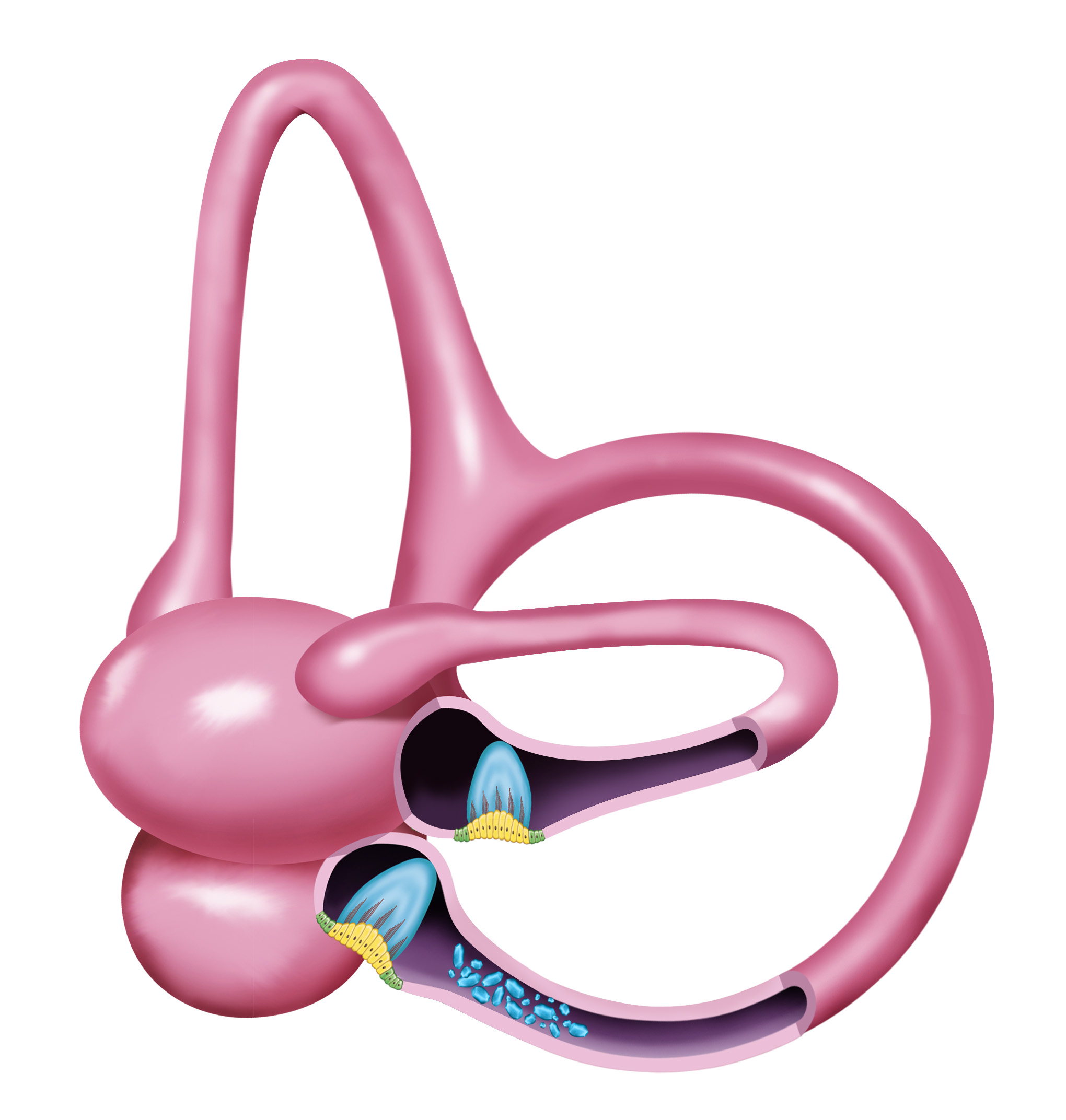
Benign Paroxysmal Positional Vertigo (BPPV) is an inner ear disorder that occurs when microscopic crystals (which are designed to help with gravity sensing) accidentally get displaced to the wrong part of the inner ear (Bhattacharyya et al., 2017).
About 30% of the population will experience BPPV by the time they are 70 years old (Ribeiro et al., 2016).
Effective management should ideally NOT involve a random approach of doing an Epley maneuver to each side and “see what happens.”
📢 Want to OPTIMIZE your BPPV treatment outcomes? Read on!
🏆PLUS
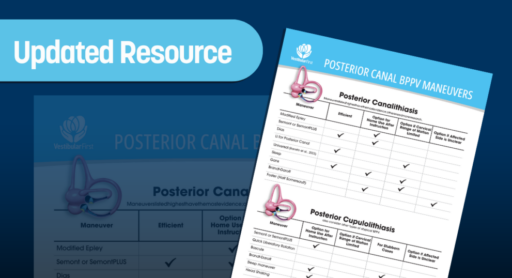
Here’s a FREE printable Maneuver Guide by Canal.
Get your Quick Master BPPV Reference Chart HERE.
1. Get the Basics Right: Don’t Jump to Positional Testing. Ask 3 Questions, then do a Complete Oculomotor and Vestibular Screening. 🔍
❓Ask about:
- Duration of symptoms? (BPPV symptoms should last < 3 minutes);
- Triggered by turning in bed? (almost no other vestibular issue is provoked by turning in bed except for BPPV);
- Triggered by looking up/down or bending down/coming up? (this can occur with other conditions, but it is common with BPPV)
✅ Performing an oculomotor and vestibular screening is essential so you don’t mistake nystagmus in a positional test as BPPV when the patient actually had clear signs of another issue (central/brain findings or peripheral vestibulopathy).
📋 Be prepared to assess posterior, horizontal and anterior semicircular canals. Based on the history and initial findings, testing may include:
- Dix–Hallpike or side-lying test for posterior canal BPPV
- Supine roll test for horizontal canal BPPV
- Straight or deep head-hanging test when anterior canal involvement is suspected
- Positional downbeat nystagmus requires careful differential diagnosis because it may reflect anterior canal BPPV, an atypical BPPV variant, or a central disorder.
-
👀 Need help identifying nystagmus patterns? New clinician or student looking to get your Vestibular Certification?
1. Explore Vestibular First’s Online On-Demand Eye Movements Course.2. Elevate your skills with our Hybrid Vestibular Certification (upcoming in-person option in Philadelphia on October 3, 2026).
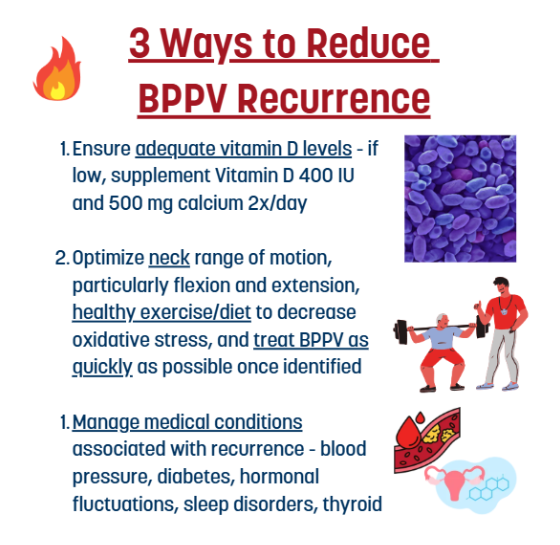
2. Level Up with Advanced Assessment Options for Challenging Cases 🧠
😎#1: Use infrared video goggles. We miss TWO THIRDS of abnormal eye movements in vestibular pathology when examining only in room light. Whenever possible, use infrared video goggles during BPPV testing (Ozel et al., 2022). This also allows you to PLAYBACK and discuss cases with colleagues, particularly in cases of short duration or tricky nystagmus.
💡#2: Advanced positional testing protocols to consider:
- Bow and Lean test after the supine roll test to clarify or confirm the affected side in horizontal canal BPPV
- Minimum stimulus BPPV strategy (upright protocol) – for an extremely nauseous or motion sensitive patient (example: emergency department) to gather initial information; if inconclusive, proceed with traditional positional testing options.
3. Treatment Should Match Type of BPPV AND Patient-Specific Characteristics🎯
🔑 Key takeaways:
- Epley is NOT the best treatment for horizontal canal, short arm posterior canal BPPV, etc. so KNOW your options! Get your Quick Master BPPV Reference Chart HERE
- Patients often present with limitations in cervical range of motion, difficulty in tolerating fast body movements, and mobility challenges, so selection of testing and treatment should be patient-specific. Here are a few resources:
- Testing modifications for acute care by the brilliant team of Drs. Sara MacDowell and Sydney Duhe, PT.
- The excellent Dr. Kim Bell, PT has great tips on modifications for the Epley for those with cervical range of motion limitations.
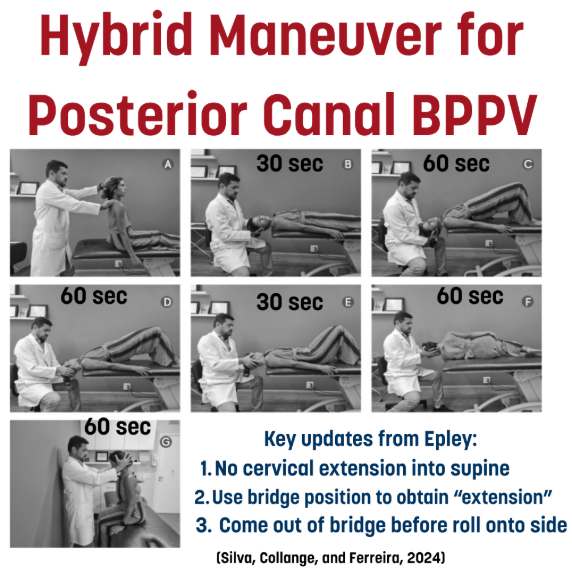
- Hybrid maneuver as a way to adapt the modified Epley for patients able to self-bridge.
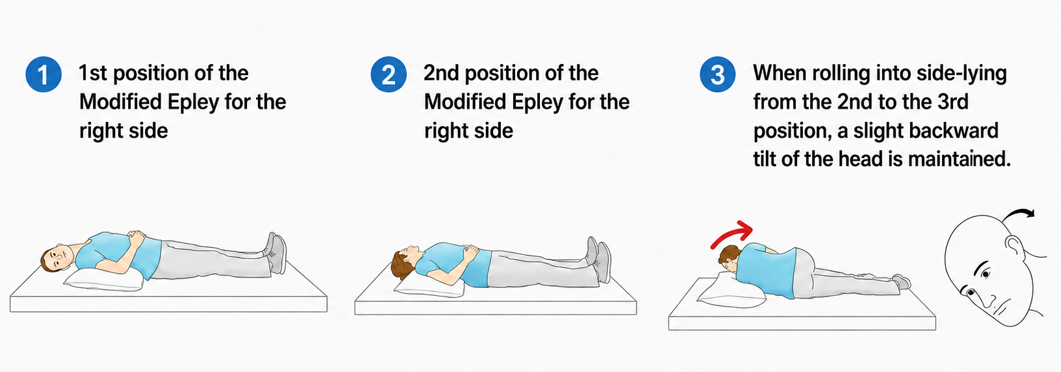
- HOT NEW Epley update: the Shigeno correction
- Why: This technique theoretically reduces conversion rates for posterior to anterior canal BPPV as well as associated possible sudden loss of balance upon returning to sit (AKA “postural crisis;” Shigeno, 2023; Califano et al., 2026).
- How: When rolling the patient from supine while the head is turned away from affected side to side-lying on the unaffected side (nose is pointed toward the floor), tilt the head into slight neck extension and maintain this head position ~1 minute (until coming to sit with chin tucked down/neck in flexion).
4. Home Maneuvers Should be TRAINED and Patient MUST Meet Criteria 🏠
✅ Patient should only be trained on home maneuvers if they meet the following criteria:
- Physical Mobility: Patient is fully independent with rolling, sitting up/lying down, and transfers (stand or pivot).
- Cognition: The patient can fully understand and perform maneuver provided.
- Symptom tolerance: Patient has minimal to no nausea and can remain calm throughout an independent treatment session without clinician guidance onsite.
📄 Need easy-to-use maneuver resourcees?
- Check out the FREE printable Maneuver Guide by Canal for recommendations on maneuvers most appropriate for home use.
- Library of printable BPPV pdf handouts here
5. Pause + Think: Consider When to Repeat, Change, or Stop Doing Maneuvers ⚠️
🚫Do Not Repeat an Ineffective Maneuver Multiple Times
- If the same BPPV pattern persists when re-testing a positional test (after 10 minute rest post-maneuver), you COULD repeat the selected maneuver once more at most (Reinink et al., 2014).
- Then, if there is still no meaningful change, perform a different maneuver that is designed to address that type of BPPV. Particularly for posterior canal BPPV, do not hesitate to perform maneuvers meant for atypical posterior canal BPPV.
- If nystagmus persists after 3-5 well-performed treatments, reconsider the diagnosis and evaluate for a coexisting peripheral vestibular disorder or a central vestibular condition with positional nystagmus mimicking BPPV (Bhattacharyya et al., 2017; Özgirgin et al., 2024).

🔥Hot Resources -> Free Auto-calculated + Printable Vestibular Outcome Measures
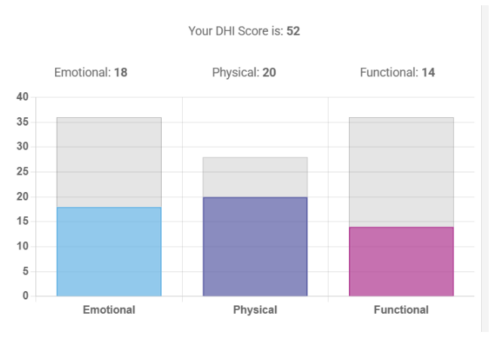
Explore Dizzy Care Network’s FREE online vestibular outcome measure questionnaires and calculators to establish baseline scores, guide treatment goals, and monitor changes over time.
For patients with BPPV, the Dizziness Handicap Inventory (DHI) is especially useful because several items address position-related activities such as rolling in bed, looking up, bending down, and moving the head quickly.
Vestibular First BPPV Continuing Education Courses

Watch Related Journal Clubs
References
- Bhattacharyya N, Gubbels SP, Schwartz SR, et al. Clinical practice guideline: benign paroxysmal positional vertigo (update). Otolaryngol Head Neck Surg. 2017;156(3 suppl):S1-S47. doi:10.1177/0194599816689667. Article link
- Califano L, Ertugrul G, Santopietro G, Melillo MG, Nuti D, Martellucci S. Shigeno correction technique is effective in reducing postural crises in the treatment of posterior canal benign paroxysmal positional vertigo. Eur Arch Otorhinolaryngol. 2026;283(3):1699-1706.
- Özel HE, Karakuzu AT, Temir H, Alpay M, Özdoğan F, Genç S. Effect of ocular fixation on positional nystagmus in BPPV patients. Int J Audiol. 2023;62(7):644-649. doi:10.1080/14992027.2022.2062579. Article link
- Özgirgin ON, Kingma H, Manzari L, Lacour M. Residual dizziness after BPPV management: exploring pathophysiology and treatment beyond canalith repositioning maneuvers. Front Neurol. 2024;15:1382196. doi:10.3389/fneur.2024.1382196. Article link
- Reinink H, Wegner I, Stegeman I, Grolman W. Rapid systematic review of repeated application of the Epley maneuver for treating posterior BPPV. Otolaryngol Head Neck Surg. 2014;151(3):399-406. doi:10.1177/0194599814536530. Article link
- Ribeiro KM, Ferreira LM, Freitas RV, Silva CN, Deshpande N, Guerra RO. “Positive to Negative” Dix-Hallpike test and Benign Paroxysmal Positional Vertigo recurrence in elderly undergoing Canalith Repositioning Maneuver and Vestibular Rehabilitation. Int Arch Otorhinolaryngol. 2016 Oct;20(4):344-352. doi: 10.1055/s-0036-1572528. Epub 2016 Feb 16. PMID: 27746838; PMCID: PMC5063735. Article link
- Shigeno K. Adverse effect of the Epley maneuver: anterior canal crisis. Auris Nasus Larynx. 2023;50(3):351-357. doi:10.1016/j.anl.2022.09.008. Article link
- Silva ALDS, Collange LA, Ferreira AS. Hybrid maneuver for benign paroxysmal positional vertigo in individuals with limited neck mobility: Case series. J Bodyw Mov Ther. 2024 Jan;37:386-391. doi: 10.1016/j.jbmt.2023.11.056. Epub 2023 Dec 12. PMID: 38432834. Article link