
Dix-Hallpike Test
Fundamentals
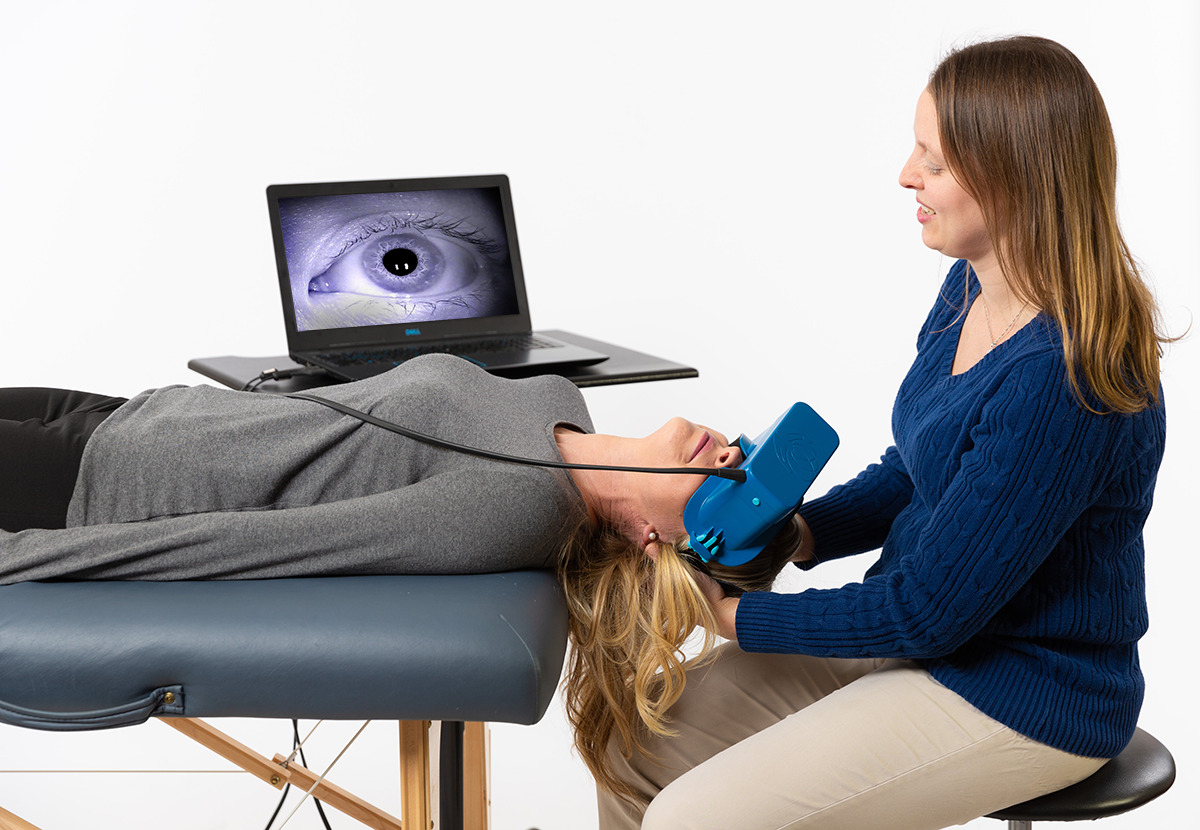
The Dix-Hallpike test is widely regarded as the gold standard for diagnosing posterior canal benign paroxysmal positional vertigo (PC-BPPV), as well as testing the contralateral anterior canal. Since anterior canal BPPV is considered to be rare, the focus for most clinicians is looking for posterior canal BPPV with this test. By transitioning the patient into a position that follows the path of the posterior semicircular canal in a gravity-dependent manner, this test often provokes the hallmark symptoms of vertigo and positional nystagmus if BPPV is present in that canal.
History

Dr. Margaret Ruth Dix

Dr. Charles Skinner Hallpike
In 1952, British otologists Margaret Ruth Dix and Charles Skinner Hallpike published a landmark study detailing the pathology, symptoms, and diagnosis of vestibular disorders, notably introducing the diagnostic test now known as the Dix-Hallpike.
During their work, Dix and Hallpike looked at 100 cases to identify key symptoms to help differentiate classic presentation of posterior canalithiaisis type BPPV: usually a latency, or delay in onset of symptoms after positioning, a rapid increase in severity of nystagmus and symptoms to a peak, nystagmus that followed the path of the posterior canal in a torsional upbeating manner toward the affected side, a brief duration of nystagmus even if the positional test position was maintained, a reversal of the direction of the nystagmus when returning the patient to sitting, and fatiguability where the symptoms lessen or eliminate after repeated testing.
Dix and Hallpike’s work provided a systematic approach to provoke and observe the characteristic nystagmus associated with BPPV, thereby facilitating accurate diagnosis and informing subsequent therapeutic strategies.
Instructions
The goal of the Dix-Hallpike test is to provoke characteristic symptoms and nystagmus associated with displaced otoconia within the affected posterior or contralateral anterior semicircular canal. The left and right sides must be tested individually.
Right Ear
- Explain the procedure to the patient and obtain consent.
- Position the patient in long-sitting on the exam table.
- Rotate the patient’s head 45° to the right (toward the side being tested). Instruct the patient to keep their eyes throughout the test.
- Keep the head to the right, support the head and guide the patient quickly into a supine position with the head hanging ~20–30° below horizontal off the end of the table or over a pillow.
- Observe the patient’s eyes for nystagmus and ask about vertigo symptoms.
- Hold this position at least 30 to 60 sec.
- If not moving into treatment from the testing position, assist the patient back to sitting, maintaining head rotation to the right.
- Monitor for vertigo and reversal of nystagmus during return to sitting and continue to guard the patient.
Left Ear
- Explain the procedure to the patient and obtain consent.
- Position the patient in long-sitting on the exam table.
- Rotate the patient’s head 45° to the left (toward the side being tested). Instruct the patient to keep their eyes throughout the test.
- Keep the head to the left, support the head and guide the patient quickly into a supine position with the head hanging ~20–30° below horizontal off the end of the table or over a pillow.
- Observe the patient’s eyes for nystagmus and ask about vertigo symptoms.
- Hold this position for 30 to 60 seconds.
- If not moving into treatment from the testing position, assist the patient back to sitting, maintaining head rotation to the left.
- Monitor for vertigo and reversal of nystagmus during return to sitting and continue to guard the patient.
Test Interpretation
An abnormal Dix-Hallpike test consistent with posterior canalithiasis type BPPV is characterized by a few seconds latency period followed by a burst of nystagmus lasting under 1 minute typically accompanied by symptoms. The classic direction of posterior canal nystagmus is upward and torsional, rotating toward the affected side. This response generally diminishes in intensity with repeated testing (fatigability). Nystagmus that matches with classic features of posterior canalithaisis type BPPV supports that diagnosis and informs appropriate treatment planning.
Example of an abnormal Dix-Hallpike for the right ear:
Related Pathology
The Dix-Hallpike test is best done with infrared video goggles due the risk of otherwise missing about 2/3 of abnormal eye movements when testing in room light or with traditional thickened lens Frenzels. See what you’re missing – access a free virtual demo (on-demand or live with a clinician) today.
Sources
- Ramirez-Gil LS, Espinosa-Arce CB. From Injury to Innovation: Margaret Dix’s Pioneering Work in Neuro-Otology. Cureus. 2024 Nov 5;16(11):e73094. https://pubmed.ncbi.nlm.nih.gov/39651015/
- Dix, Hallpike The pathology symptomatology and diagnosis of certain common disorders of the vestibular system. Proc R Soc Med. 1952 Jun;45(6):341-54. https://pmc.ncbi.nlm.nih.gov/articles/PMC1987487/?page=3
- Jeon EJ, Lee DH, Park JM, Oh JH, Seo JH. The efficacy of a modified Dix-Hallpike test with a pillow under shoulders. J Vestib Res. 2019;29(4):197-203. https://pubmed.ncbi.nlm.nih.gov/31256096/
- Dhiman NR, Raj D, Gyanpuri V, Kumar A, Singh VK, Pathak A, Chaurasia RN, Mishra VN, Joshi D. Evaluating the Diagnostic Accuracy of the Side-Lying Test for Posterior Canal BPPV: Sensitivity and Specificity Analysis. Otol Neurotol. 2025 Apr 17 https://pubmed.ncbi.nlm.nih.gov/40307982/
- Bhattacharyya, Neil, et al. “Clinical Practice Guideline: Benign Paroxysmal Positional Vertigo (Update).” Otolaryngology–Head and Neck Surgery, vol. 156, no. 3_suppl, 2017, pp. S1–S47. https://aaohnsfjournals.onlinelibrary.wiley.com/doi/10.1177/0194599816689667
- von Brevern, M., Bertholon, P., Brandt, T., Fife, T., Imai, T., Nuti, D., & Newman-Toker, D. E. (2015). Benign paroxysmal positional vertigo: Diagnostic criteria. Journal of Vestibular Research, 25(3-4), 105-117. https://pubmed.ncbi.nlm.nih.gov/26756126/
- Fife TD, Iverson DJ, Lempert T, et al. (2008). Practice parameter: therapies for benign paroxysmal positional vertigo. Neurology, 70(22), 2067–2074
- Hilton, M. P., & Pinder, D. K. (2014). The Epley (canalith repositioning) manoeuvre for benign paroxysmal positional vertigo. Cochrane Database of Systematic Reviews, 2014(12), CD003162. https://www.cochranelibrary.com/cdsr/doi/10.1002/14651858.CD003162.pub3/full
- Kim JS, Zee DS. Benign Paroxysmal Positional Vertigo. N Engl J Med. 2014. https://www.nejm.org/doi/abs/10.1056/NEJMcp1309481
- Talmud, J. D., Coffey, R., Hsu, N. M., & Edemekong, P. F. (2023, July 19). Dix-Hallpike Maneuver. In StatPearls. StatPearls Publishing https://www.ncbi.nlm.nih.gov/books/NBK459307/