
Atypical BPPV
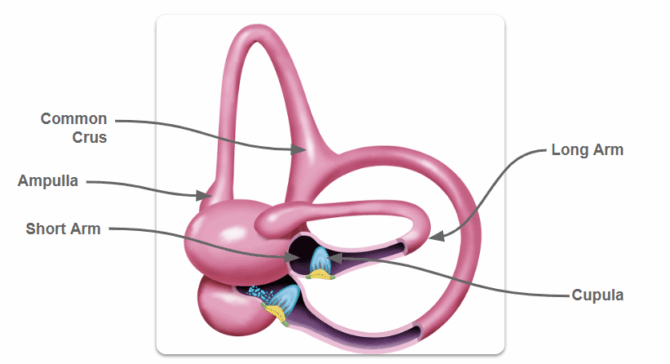
What is Atypical BPPV (Benign Paroxysmal Positional Vertigo)?
Atypical BPPV can be defined as (Carmona et al., 2022):
- Nystagmus that does not align with the classic description of the affected canal
- Findings that suggest a suspected canal pattern over time (e.g., transformation of downbeat nystagmus into classic torsional upbeat nystagmus, as can sometimes be seen when short-arm posterior canal BPPV converts to long-arm posterior canal BPPV)
- Responds to repositioning maneuvers
- Central causes have been ruled out
Types of Atypical BPPV:
1. Short Arm Posterior Canal
The short arm of the posterior canal is a small segment between the cupula and the utricle, an area housed within the ampulla. Because of its dependent position and conical shape, this region could be vulnerable to the accumulation of displaced otoconia. When debris becomes trapped here, the clinical picture may deviate from “classic” long arm posterior canal BPPV (Helminski, 2025; Helminski, 2022; Ping et al., 2022).
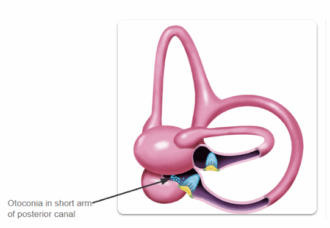
How It Could Present:
- Downbeat or downbeat-torsional nystagmus (torsional away from the involved side)
- No nystagmus but symptomatic (usually briefly) during Dix-Hallpike or straight head hanging test
- Either upbeat torsional toward the involved side or downbeat torsional toward the uninvolved side with return to sit upright from Dix-Hallpike or straight head hang test
- Transient, pure upbeat nystagmus or upbeat with torsion toward the involved side (similar to classic posterior canal BPPV presentation) but does not respond to traditional posterior canal maneuvers such as modified Epley or Semont
Nystagmus consistent with left short arm posterior canal BPPV (downbeat and torsional away from side of involvement):
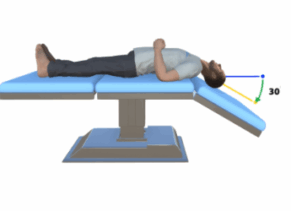
Testing Positions for Short Arm Posterior Canal BPPV:
Treatment Maneuvers Used in Research to Treat Theorized Short Arm Posterior Canal BPPV:
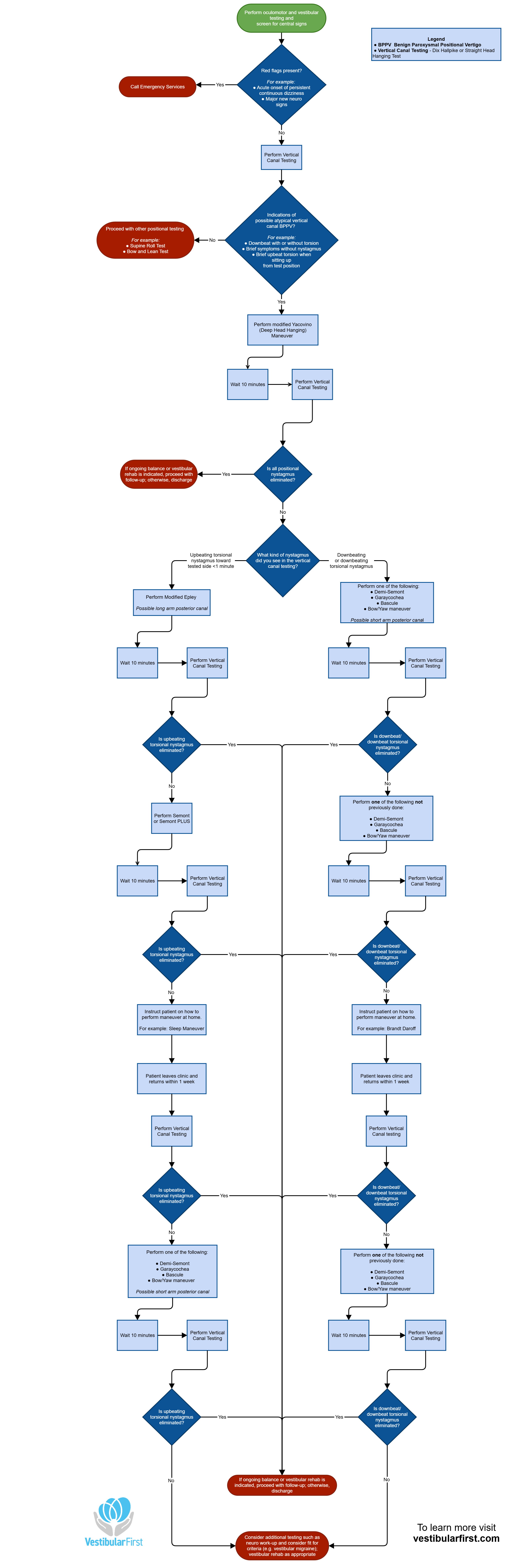
Managing Atypical Vertical Canal BPPV
This algorithm flowchart outlines a stepwise approach to the evaluation and management of possible atypical vertical canal BPPV, guiding clinicians through differential diagnosis and the selection of appropriate canal-specific treatment maneuvers. This was designed by Vestibular First to help with clinical decision-making.
2. Atypical Horizontal Canal
Horizontal canalithiasis BPPV historically has been described as demonstrating geotropic nystagmus during the supine roll test; whereas, horizontal cupulolithiasis has commonly been described as presenting with apogeotropic nystagmus during the supine roll test.
However, researchers have explored the idea that otoconia may lodge themselves elsewhere in the horizontal canal in ways that mimic one of the two aforementioned presentations:
- Horizontal canal jam – Otoconia may block the long arm of the horizontal canal, creating a canalith jam. This obstruction can initially present as a direction-fixed horizontal nystagmus during the supine roll test. Then upon re-test of the supine roll test, you may see a conversion of the nystagmus into a geotropic type as the otoconia jam loosens and shifts in the canal (Chang et al., 2014; Schubert et al., 2020).
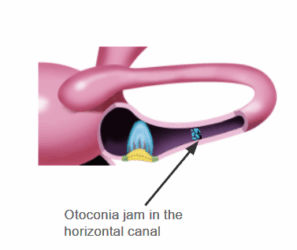
- Otoconia in the short arm of the horizontal canal – As in the posterior canal, the horizontal canal has a short section in the ampulla on the utricular side of the cupula. Otoconia have been theorized to get trapped in that short section, which could result in a apogeotropic nystagmus during the supine roll test (Balatsouras et al., 2011). In such cases, less commonly used horizontal canal BPPV treatments, such as supine head shaking, may be required if more typical maneuvers (e.g., barbecue/Lempert roll, Gufoni, or forced prolonged positioning) are ineffective.
How It Could Present:
- Horizontal direction-fixed spontaneous nystagmus that converts to geotropic nystagmus with repeated supine roll testing
- Apogeotropic nystagmus that may need more maneuvers or less often used maneuvers to clear
Example of apogeotropic nystagmus in the supine roll test
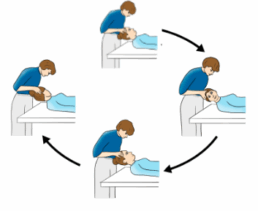
Testing Positions that May Provoke Atypical Horizontal Canal BPPV:
Maneuvers that May Clear Atypical Horizontal Canal BPPV
- Barbecue maneuver
- Gufoni maneuver
- Casani
- Forced prolonged positioning
Mimics of Atypical BPPV:
1. Central Causes
Not all positional nystagmus is peripheral in origin. Central vestibular issues such as posterior circulation strokes, tumors, and multiple sclerosis (which can all show lesions on imaging) as well as vestibular migraine and degenerative cerebellar ataxias (which may not show changes on imaging) may produce positional nystagmus that appears similar to BPPV (Male et al., 2025).
How It Could Present:
- Downbeating or horizontal apogeotropic nystagmus are most common findings usually with no latency, frequently persistent while in the provoking position, often without crescendo/decrescendo during positional testing.
- Features that do not fit with BPPV patterns
- Refractory (does not change) to maneuvers for appropriate canal
- Multiple episodes of nystagmus, with or without symptoms (variable) presenting as if multi-canal or different canals each time
- Other features concurrent with the nystagmus that do not fit BPPV per se (example: light sensitivity which is a common feature for those with vestibular migraine)
Example of downbeating nystagmus consistent with central origin:
Testing positions that may provoke central positional nystagmus:
Next Steps
- Consider neurologic work-up if:
- no prior neurologic diagnosis that explains current neuro findings (or if significant worsening of findings/symptoms);
- nystagmus persists after 2-3 sessions of well-applied BPPV maneuvers, or
- new significant neuro findings and/or sudden new onset hearing loss
(Helminski, 2022; Bhattacharyya et al., 2017)
- If neurological work-up does not establish a clear root cause, consider other conditions that have diagnostic criteria or additional considerations for further testing:
- Vestibular migraine diagnostic criteria.
- Vestibular paroxysmia diagnostic criteria
- Vascular issues: consider stroke risk factors
-
Evaluate balance and dizziness concerns to determine whether patients may benefit from vestibular rehabilitation.
2. Light Cupula
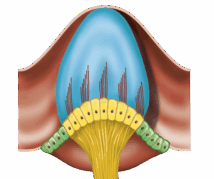
A theory in which the cupula of the horizontal semicircular canal may become relatively lighter than the surrounding endolymph, making it abnormally sensitive to gravity. Instead of remaining neutral at rest, the density imbalance causes the cupula to be persistently deflected, producing continuous neural firing (Lee et al., 2023; Bal et al., 2022). The existence of “light cupula” remains highly debated. Clinically, it may resemble horizontal canal BPPV but fails to resolve with standard canalith repositioning maneuvers and instead subsides spontaneously. In these cases, alternative explanations such as central vestibular disorders (e.g., stroke or vestibular migraine) must also be considered (Schubert et al., 2017); (Lee et al. 2023).
How it Could Present:
-
Persistent (≥1 min) geotropic direction-changing positional nystagmus without latency or fatigability on the supine roll test
-
A null plane/neutral point -a specific head position where the nystagmus stops, with further head rotation resulting in geotropic nystagmus again
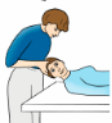
Testing Positions that May Provoke “Light Cupula” Presentation:
Next Steps
Light cupula usually resolves spontaneously within 1–2 weeks, and repositioning maneuvers (e.g., barbecue roll, Lempert, Gufoni) generally do not alter the nystagmus (Imai et al., 2015; Lee et al., 2023). Because persistent geotropic nystagmus can also arise from central causes, these patients should be monitored for new neurological signs (Lee & Tarnutzer, 2025), in case the root issue is a small vascular issue in the brain which could be a precursor for another more significant stroke.
Clinical Takeaways
- Atypical BPPV is estimated to comprise 15% of BPPV cases (Helminski, 2025), indicating that more than one in ten patients presenting with BPPV may exhibit an atypical form. Clinicians should be prepared to manage these more complex presentations and ensure accurate differentiation from central vestibular causes of positional nystagmus.
-
Do Not Rely Solely on Symptom Descriptions to Guide BPPV Testing
- Over half of patients with acute dizziness in the ED could not describe their symptoms, and research shows that symptom type alone does not reliably predict the underlying cause. (Edlow et al., 2023; Tarnutzer et al., 2025)
- Timing and triggers may help screen for those who should be prioritized for BPPV assessment:
- If dizziness lasts less than 3 minutes (Kim et al., 2023)
- Yes or Sometimes on Questions 1,5,11,13 and 25 on DHI (Metz and Bryce, 2024)
-
Test all patients over 60 years old with any balance issues for BPPV, even if they do not report dizziness or vertigo (Li et al., 2023).
- BPPV is a leading, treatable cause of falls in older adults, but some may present with imbalance alone due to vestibular agnosia, which can lead to missed diagnoses if these patients are not screened.
-
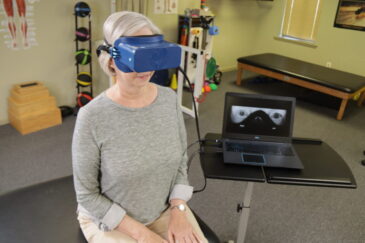
Test the straight (supine) head hanging test in addition the Dix-Hallpike and use infrared video goggles to record possible atypical BPPV nystagmus
- Anatomical studies and one retrospective study indicate that the head-hang test can detect additional cases of downbeat nystagmus (possible atypical BPPV) that would be missed if only the Dix–Hallpike were performed (Porwal et al., 2021).
- In cases of atypical BPPV where the nystagmus is mild, it can be missed in room light (Özel et al., 2022). Nearly two-thirds of abnormal eye movements in vestibular patients are missed when relying solely on traditional thickened Frenzel lenses (Baba et al., 2004).
Want to learn more about BPPV? – Check out these resources
- Vestibular First: Online, Self-Paced CEU Courses for Clinicians. Course Bundles now available!
- Intro Courses
- Intermediate Courses
- Comprehensive list of Vestibular Education and Course Providers
- Vestibular Today Free Access Online BPPV Resources
- Balancing Act Rehabilitation: Understanding and Managing BPPV page
Sources
- Bal, N., Altun, M., Kuru, E. et al. Light cupula phenomenon: a systematic review. Egypt J Otolaryngol 38, 150 (2022). https://doi.org/10.1186/s43163-022-00336-5 https://link.springer.com/article/10.1186/s43163-022-00336-5#citeas
- Baba S, Fukumoto A, Aoyagi M, Koizumi Y, Ikezono T, Yagi T. (2004). A Comparative Study on the Observation of Spontaneous Nystagmus with Frenzel Glasses and an Infrared CCD Camera. Journal of Nippon Medical School. 71 (1): 25-29. https://www.jstage.jst.go.jp/article/jnms/71/1/71_1_25/_pdf/-char/en.
- Balatsouras DG, Koukoutsis G, Ganelis P, Korres GS, Kaberos A. Diagnosis of Single- or Multiple-Canal Benign Paroxysmal Positional Vertigo according to the Type of Nystagmus. Int J Otolaryngol. 2011;2011:483965. doi: 10.1155/2011/483965. Epub 2011 Jul 14. PMID: 21792356; PMCID: PMC3139887. https://pmc.ncbi.nlm.nih.gov/articles/PMC3139887/
- Bhattacharyya N, Gubbels SP, Schwartz SR, Edlow JA, El-Kashlan H, Fife T, Holmberg JM, Mahoney K, Hollingsworth DB, Roberts R, Seidman MD, Steiner RW, Do BT, Voelker CC, Waguespack RW, Corrigan MD. Clinical Practice Guideline: Benign Paroxysmal Positional Vertigo (Update). Otolaryngol Head Neck Surg. 2017 Mar;156(3_suppl):S1-S47. doi: 10.1177/0194599816689667. PMID: 28248609. https://pubmed.ncbi.nlm.nih.gov/28248609/
- Carmona S, Zalazar GJ, Fernández M, Grinstein G, Lemos J. Atypical Positional Vertigo: Definition, Causes, and Mechanisms. Audiol Res. 2022 Mar 14;12(2):152-161. doi: 10.3390/audiolres12020018. PMID: 35314613; PMCID: PMC8938844. https://pmc.ncbi.nlm.nih.gov/articles/PMC8938844/
- Chang YS, Choi J, Chung WH. Persistent Direction-Fixed Nystagmus Following Canalith Repositioning Maneuver for Horizontal Canal BPPV: A Case of Canalith Jam. Clin Exp Otorhinolaryngol. 2014 Jun;7(2):138-41. doi: 10.3342/ceo.2014.7.2.138. Epub 2014 May 21. PMID: 24917912; PMCID: PMC4050087. https://pmc.ncbi.nlm.nih.gov/articles/PMC4050087/
- Edlow JA, Carpenter C, Akhter M, Khoujah D, Marcolini E, Meurer WJ, Morrill D, Naples JG, Ohle R, Omron R, Sharif S, Siket M, Upadhye S, E Silva LOJ, Sundberg E, Tartt K, Vanni S, Newman-Toker DE, Bellolio F. Guidelines for reasonable and appropriate care in the emergency department 3 (GRACE-3): Acute dizziness and vertigo in the emergency department. Acad Emerg Med. 2023 May;30(5):442-486. doi: 10.1111/acem.14728. PMID: 37166022. https://pubmed.ncbi.nlm.nih.gov/37166022/
- Harmat K, Tamás LT, Schubert MC, Gerlinger I, Komoly S, Büki B. Prevalence of and Theoretical Explanation for Type 2 Benign Paroxysmal Positional Vertigo. J Neurol Phys Ther. 2022 Apr 1;46(2):88-95. doi: 10.1097/NPT.0000000000000383. PMID: 35081081. https://pubmed.ncbi.nlm.nih.gov/35081081/
- Helminski JO. Case report: Atypical patterns of nystagmus suggest posterior canal cupulolithiasis and short-arm canalithiasis. Front Neurol. 2022 Oct 10;13:982191. doi: 10.3389/fneur.2022.982191. PMID: 36299265; PMCID: PMC9588913. https://pubmed.ncbi.nlm.nih.gov/36299265/
- Helminski JO. Atypical PC-BPPV – Cupulolithiasis and Short-Arm Canalithiasis: A Retrospective Observational Study. J Neurol Phys Ther. 2025 Jan 1;49(1):51-61. doi: 10.1097/NPT.0000000000000494. Epub 2024 Oct 16. PMID: 39656163; PMCID: PMC11594558. https://pubmed.ncbi.nlm.nih.gov/39656163/
- Imai T, Matsuda K, Takeda N, Uno A, Kitahara T, Horii A, Nishiike S, Inohara H. Light cupula: the pathophysiological basis of persistent geotropic positional nystagmus. BMJ Open. 2015 Jan 13;5(1):e006607. doi: 10.1136/bmjopen-2014-006607. PMID: 25586370; PMCID: PMC4298092. https://pmc.ncbi.nlm.nih.gov/articles/PMC4298092/
- Kim HKim JChoi K, et al. Effect of Self-treatment of Recurrent Benign Paroxysmal Positional Vertigo: A Randomized Clinical Trial. JAMA Neurol. 2023;80(3):244–250. doi:10.1001/jamaneurol.2022.4944 https://jamanetwork.com/journals/jamaneurology/fullarticle/2800168?utm_source
- Kim MB, Hong SM, Choi H, Choi S, Pham NC, Shin JE, Kim CH. The Light Cupula: An Emerging New Concept for Positional Vertigo. J Audiol Otol. 2018 Jan;22(1):1-5. doi: 10.7874/jao.2017.00234. Epub 2017 Oct 24. PMID: 29061034; PMCID: PMC5784369. https://pubmed.ncbi.nlm.nih.gov/29061034/
- Lee DH, Kim TH, Jang M, Kim CH. The Light Cupula Phenomenon: A Scoping Review. Brain Sci. 2023 Dec 23;14(1):15. doi: 10.3390/brainsci14010015. PMID: 38248229; PMCID: PMC10813105. https://pubmed.ncbi.nlm.nih.gov/38248229/
- Lee SU, Tarnutzer AA. Usefulness of Nystagmus Patterns in Distinguishing Peripheral From Central Acute Vestibular Syndromes at the Bedside: A Critical Review. J Clin Neurol. 2025 May;21(3):161-172. doi: 10.3988/jcn.2025.0105. PMID: 40308011; PMCID: PMC12056143. https://pubmed.ncbi.nlm.nih.gov/40308011/
- Li Y, Smith RM, Whitney SL, Seemungal BM, Ellmers TJ. We should be screening for benign paroxysmal positional vertigo (BPPV) in all older adults at risk of falling: a commentary on the World Falls Guidelines. Age Ageing. 2023 Nov 2;52(11):afad206. doi: 10.1093/ageing/afad206. PMID: 37979182. https://pubmed.ncbi.nlm.nih.gov/37979182/
- Metz D, Bryce K. The rationale and recommendations for inclusion of screening for benign paroxysmal positional vertigo in falls clinics. J Laryngol Otol. 2024 Jun;138(S2):S32-S34. doi: 10.1017/S0022215123002049. Epub 2024 Jan 31. PMID: 38291914. https://pubmed.ncbi.nlm.nih.gov/38291914/
- Özel HE, Karakuzu AT, Temir H, Alpay M, Özdoğan F, Genç S. Effect of ocular fixation on positional nystagmus in BPPV patients. Int J Audiol. 2023 Jul;62(7):644-649. doi: 10.1080/14992027.2022.2062579. https://pubmed.ncbi.nlm.nih.gov/35438599/
- Peña Navarro P, Pacheco López S, Almeida Ayerve CN, Marcos Alonso S, Serradilla López JM, Santa Cruz Ruiz S, Gómez Sánchez JC, Kaski D, Batuecas Caletrío Á. Early Diagnosis of Central Disorders Mimicking Horizontal Canal Cupulolithiasis. Brain Sci. 2023 Mar 27;13(4):562. doi: 10.3390/brainsci13040562. PMID: 37190527; PMCID: PMC10137293. https://pubmed.ncbi.nlm.nih.gov/37190527/
- Ping L, Yi-Fei Z, Shu-Zhi W, Yan-Yan Z, Xiao-Kai Y. Diagnosis and treatment of the short-arm type posterior semicircular canal BPPV. Braz J Otorhinolaryngol. 2022 Sep-Oct;88(5):733-739. doi: 10.1016/j.bjorl.2020.10.012. Epub 2020 Nov 23. PMID: 33303414; PMCID: PMC9483947. https://pmc.ncbi.nlm.nih.gov/articles/PMC9483947/
- Porwal P, Ananthu VR, Pawar V, Dorasala S, Bijlani A, Nair P, Nayar R. Clinical and VNG features in anterior canal BPPV—an analysis of 13 cases. Front Neurol. 2021;12:618269. doi:10.3389/fneur.2021.618269 https://www.frontiersin.org/journals/neurology/articles/10.3389/fneur.2021.618269/full
- Schubert MC, Helminski J, Zee DS, Cristiano E, Giannone A, Tortoriello G, Marcelli V. Horizontal semicircular canal jam: Two new cases and possible mechanisms. Laryngoscope Investig Otolaryngol. 2020 Jan 16;5(1):163-167. doi: 10.1002/lio2.352. PMID: 32128444; PMCID: PMC7042637. https://pubmed.ncbi.nlm.nih.gov/32128444/
- Schubert, M. C., Dunlap, P. M., & Whitney, S. L. (2017). A case study of high-velocity, persistent geotropic nystagmus: Is this bppv? Journal of Neurologic Physical Therapy, 41(3), 182-186. https://doi.org/10.1097/NPT.0000000000000191 https://pure.johnshopkins.edu/en/publications/a-case-study-of-high-velocity-persistent-geotropic-nystagmus-is-t?utm_source
- Scocco DH, Barreiro MA, García IE. “Sitting-up vertigo as an expression of posterior semicircular canal heavy cupula and posterior semicircular canal short arm canalolithiasis”. J Otol. 2022 Apr;17(2):101-106. doi: 10.1016/j.joto.2022.02.001. Epub 2022 Feb 16. PMID: 35949549; PMCID: PMC9349016. https://pubmed.ncbi.nlm.nih.gov/35949549/
- Tarnutzer AA, Kerkeni H, Diener S, Kalla R, Candreia C, Piantanida R, Maire R, Welge-Lüssen A, Budweg J, Zwergal A, Dlugaiczyk J. Diagnosis and treatment of vertigo and dizziness : Interdisciplinary guidance paper for clinical practice. HNO. 2025 Jun 17. English. doi: 10.1007/s00106-025-01599-z. Epub ahead of print. PMID: 40526155. https://pubmed.ncbi.nlm.nih.gov/40526155/