
Unilateral Triple Canal Repositioning Maneuver (UTCRM)
Description
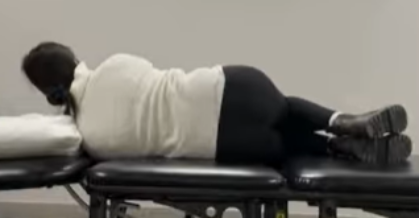
Cherchi’s Universal Maneuver, also described as the Unilateral Triple Canal Repositioning Maneuver, is a proposed treatment concept for BPPV designed to address involvement of any of the three semicircular canals on one side. Unlike canal-specific maneuvers such as the modified Epley, BBQ roll, or deep head-hanging maneuver, this approach was developed to follow a broader gravitational pathway that may reposition otoconia from the posterior, horizontal, or anterior canal back toward the utricle. Current support is mainly based on 3D model simulation, so it should be described as an emerging or theoretical maneuver rather than a well-established, clinically validated treatment.
Effectiveness
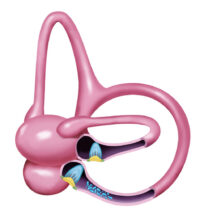
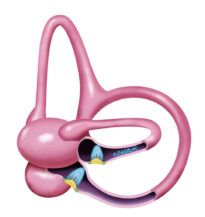
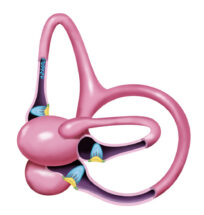
In the computer simulation, the maneuver showed 100% simulated efficacy for all three canals on the treated side, but the author specifically notes that the result should be viewed with caution and that the maneuver requires empirical validation as a standalone treatment (Cherchi, 2025).
History
The treatment was developed by Dr. Marcello Cherchi, MD, PhD, a board-certified neurologist and otoneurologist at UChicago Medicine whose clinical and research work focuses on dizziness, vertigo, balance, and hearing disorders. It was published in 2025 after Cherchi used the BPPV Viewer simulator to study how existing canalith repositioning maneuvers move otoconia through the semicircular canals. Based on these simulations, he designed the UTCRM to address a common failure pattern in which particles approach the middle portion of a canal but then move back toward the ampulla during larger position changes.

Dr. Marcello Cherchi
Instructions
Right
Explain the procedure to the patient and obtain consent.
- Start with the patient in long sitting, with the head at midline.
- Have the patient lie down onto the right side, keeping the head at midline. No hold time was specified; consider holding until symptoms resolve plus at least 30 seconds.
- From right side-lying, move the patient into a supine position with the head turned 45° to the right and approximately 30° of neck extension, similar to a right Dix-Hallpike position. No hold time was specified; consider holding until symptoms resolve plus at least 30 seconds.
- Rotate the head from right to center/midline while maintaining approximately 30° of neck extension, similar to a straight head-hanging position. No hold time was specified; consider holding until symptoms resolve plus at least 30 seconds.
- Rotate the head 45° to the left while maintaining approximately 30° of neck extension. No hold time was specified; consider holding until symptoms resolve plus at least 30 seconds.
- Roll the patient onto the left side, with the head at midline. No hold time was specified; consider holding until symptoms resolve plus at least 30 seconds.
- Laterally flex the neck 45° away from the table, so the right ear moves toward the right shoulder. No hold time was specified; consider holding until symptoms resolve plus at least 30 seconds.
- Return the patient to a neutral seated position with the head at midline.
Left
Explain the procedure to the patient and obtain consent.
- Start with the patient in long sitting, with the head at midline.
- Have the patient lie down onto the left side, keeping the head at midline. No hold time was specified; consider holding until symptoms resolve plus at least 30 seconds.
- From left side-lying, move the patient into a supine position with the head turned 45° to the left and approximately 30° of neck extension, similar to a left Dix-Hallpike position. No hold time was specified; consider holding until symptoms resolve plus at least 30 seconds.
- Rotate the head from left to center/midline while maintaining approximately 30° of neck extension, similar to a straight head-hanging position. No hold time was specified; consider holding until symptoms resolve plus at least 30 seconds.
- Rotate the head 45° to the right while maintaining approximately 30° of neck extension. No hold time was specified; consider holding until symptoms resolve plus at least 30 seconds.
- Roll the patient onto the right side, with the head at midline. No hold time was specified; consider holding until symptoms resolve plus at least 30 seconds.
- Laterally flex the neck 45° away from the table, so the left ear moves toward the left shoulder. No hold time was specified; consider holding until symptoms resolve plus at least 30 seconds.
- Return the patient to a neutral seated position with the head at midline.
Related Pathology
Sources
Cherchi M. Unilateral Triple Canal Repositioning Maneuver: Principles and Design. Audiol Res. 2025 May 8;15(3):55. doi: 10.3390/audiolres15030055. PMID: 40407669; PMCID: PMC12101378. https://www.mdpi.com/2039-4349/15/3/55