
Head Shaking Maneuver for Posterior Cupulolithiasis
Description
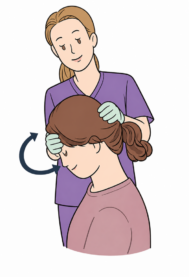
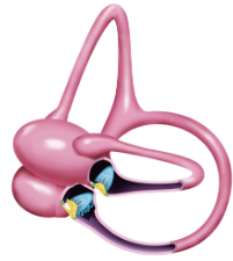
The seated head-shaking maneuver is a treatment option described for posterior cupulolithiasis BPPV, where otoconia are thought to be attached to the cupula rather than freely moving within the canal. The goal of the maneuver is to use rapid alternating head acceleration and deceleration to help detach debris from the posterior canal cupula. Because the maneuver is performed in a seated, midline position rather than directed toward a specific affected side, it may be useful when the involved side is unclear or difficult to confirm.
Effectiveness
There is limited but supportive evidence for short-term treatment of posterior canal BPPV cupulolithiasis. In one randomized clinical trial, resolution of both positional vertigo and nystagmus occurred by the next day in 37.7% of patients treated with seated head-shaking compared with 13.2% after sham treatment (Oh et al., 2025). Immediate resolution within 30 minutes was less common and not statistically significant. Long-term effectiveness and recurrence rates have not yet been established.
History
The seated head-shaking maneuver was adapted from earlier use of therapeutic head-shaking for horizontal cupulolithiasis BPPV. Its use for posterior canal BPPV cupulolithiasis is newer; Oh et al. studied it in a 2025 randomized clinical trial because no validated treatment had been established for this subtype.
Instructions
The purpose is to help detach otoconia adhered to the posterior canal cupula and promote resolution of positional vertigo and nystagmus in posterior canal BPPV cupulolithiasis.
- Explain the procedure to the patient and obtain consent.
- Seat the patient upright.
- Flex the patient’s head forward 30°.
- Move the head laterally side to side at approximately 3 Hz for 15 seconds.
- Wait 30 minutes, then reassess for positional vertigo and nystagmus.
- If both persist, repeat the maneuver one time.
Related Pathology
Sources
Oh EHChoi JKim HS, et al. Treatment Maneuvers in Cupulolithiasis of the Posterior Canal Benign Paroxysmal Positional Vertigo: A Randomized Clinical Trial. JAMA Netw Open. 2025;8(3):e250972. doi:10.1001/jamanetworkopen.2025.0972 https://jamanetwork.com/journals/jamanetworkopen/fullarticle/2831703