
Gans Maneuver
Description
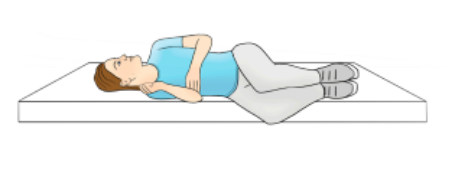
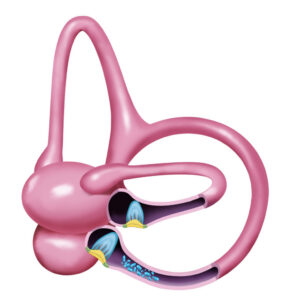
The Gans Repositioning Maneuver is a treatment for posterior canalithiasis BPPV. It is considered a hybrid maneuver because it combines concepts from canalith repositioning maneuvers, such as Epley, and liberatory maneuvers, such as Semont. The maneuver uses a series of controlled head and body positions to move otoconia through the posterior canal and back toward the utricle. It is one of several described treatment options for posterior canal BPPV (Roberts et al., 2006; Joshi et al., 2022).
Effectiveness
In comparison studies, early Gans maneuver outcomes ranged from 56.7% objective improvement at 24 hours to 83.3% of patients improving after one treatment attempt, although the studies used different outcome definitions and follow-up timing (Saberi et al., 2017; Nadagoud et al., 2024). Overall, the Gans maneuver appears to be a reasonable treatment option for posterior canal BPPV, but current evidence does not show that it is consistently superior to other established maneuvers.
History
The Gans Repositioning Maneuver was introduced as a modified posterior canal BPPV treatment for patients who may have difficulty tolerating neck hyperextension, brisk side-to-side movement, or other positioning demands, including those with cervical spondylosis, vertebrobasilar insufficiency, or back problems. Richard E. Gans, one of the original authors, founded the American Institute of Balance and is associated with several vestibular testing and treatment protocols (Roberts et al., 2006).

Dr. Richard Gans
Instructions
The purpose is to move free-floating otoconia out of the posterior semicircular canal and back toward the utricle.
Right
- Begin with the patient seated upright and facing forward.
- Turn the patient’s head 45° to the left.
- Move the patient into side-lying on the right side while maintaining the 45° head turn to the left.
- Roll the patient from the right side onto the left side, keeping the head turned 45° to the left.
- After symptoms are provoked in this second position, have the patient shake the head side-to-side 3 to 4 times.
- Return the patient to an upright seated position with the head facing forward in the center position.
Left
- Begin with the patient seated upright and facing forward.
- Turn the patient’s head 45° to the right.
- Move the patient into side-lying on the left side while maintaining the 45° head turn to the right.
- Roll the patient from the left side onto the right side, keeping the head turned 45° to the right.
- After symptoms are provoked in this second position, have the patient shake the head side-to-side 3 to 4 times.
- Return the patient to an upright seated position with the head facing forward in the center position.
Related Pathology
Sources
- Dhiman NR, Joshi D, Gyanpuri V, Pathak A, Kumar A. Comparison between Epley and Gans repositioning maneuvers for posterior canal BPPV: a randomized controlled trial. Ann Indian Acad Neurol. 2023;26(4):537-542. doi:10.4103/aian.aian_12_23 https://pubmed.ncbi.nlm.nih.gov/37970256=
- Fazelifard A, Ashrafi M. The efficacy of the Gans repositioning maneuver in comparison with the Epley maneuver in elderly patients with benign paroxysmal positional vertigo. Aud Vestib Res. 2025;34(2):144-150. doi:10.18502/avr.v34i2.18057 https://avr.tums.ac.ir/index.php/avr/article/view/1307?utm_source
- Gayathri H, Preethi GR, Christina PM. Outcome of Gans repositioning maneuver in patients with posterior canal benign paroxysmal positional vertigo with cervical spondylosis. Indian J Otol. 2019;25(4):196-200. doi:10.4103/indianjotol.INDIANJOTOL_62_19 https://journals.lww.com/ijoo/fulltext/2019/25040/outcome_of_gans_repositioning_maneuver_in_patients.6.aspx?utm_source
- Joshi D, Gyanpuri V, Pathak A, Chaurasia RN, Mishra VN, Kumar A, Singh VK, Raj D, Dhiman NR. Gans repositioning maneuver for the posterior canal BPPV patients: systematic review and meta-analysis. Eur Arch Otorhinolaryngol. 2022;279(9):4241-4246. doi:10.1007/s00405-022-07396-6 https://pubmed.ncbi.nlm.nih.gov/35460377/
- Nadagoud SV, Bhat VS, Pragathi BS. Comparative efficacy of Epley, Semont and Gans maneuver in treating posterior canal benign paroxysmal positional vertigo. Indian J Otolaryngol Head Neck Surg. 2024;76(1):48-54. doi:10.1007/s12070-023-04071-y https://pubmed.ncbi.nlm.nih.gov/38440539/
- Roberts RA, Gans RE, Montaudo RL. Efficacy of a new treatment maneuver for posterior canal benign paroxysmal positional vertigo. J Am Acad Audiol. 2006;17(8):598-604. doi:10.3766/jaaa.17.8.6 https://pubmed.ncbi.nlm.nih.gov/16999254/
- Saberi A, Nemati S, Sabnan S, Mollahoseini F, Kazemnejad E. A safe-repositioning maneuver for the management of benign paroxysmal positional vertigo: Gans vs. Epley maneuver; a randomized comparative clinical trial. Eur Arch Otorhinolaryngol. 2017;274(8):2973-2979. doi:10.1007/s00405-016-4235-7 https://pubmed.ncbi.nlm.nih.gov/27488837/