
Zuma Maneuver
Description
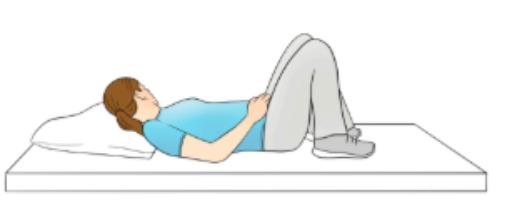
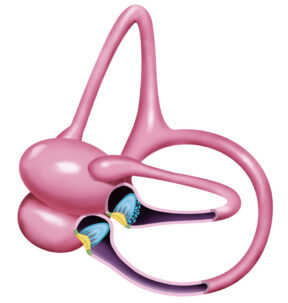
The Zuma maneuver or Zuma e Maia maneuver is used to treat apogeotropic horizontal canal BPPV when cupulolithiasis is suspected. In this form, otoconia may be attached to either the canal side or utricular side of the cupula (Ramos et al., 2019; Zuma e Maia et al., 2020; Alvarez de Linera-Alperi et al., 2022). The maneuver uses rapid and gravity-assisted head and body positions to help detach the otoconia from the cupula and move them toward the utricle. Unlike maneuvers that primarily aim to convert apogeotropic nystagmus into a geotropic pattern, the Zuma e Maia maneuver includes additional steps intended to continue repositioning the debris toward the utricle (Alvarez de Linera-Alperi et al., 2022).
Effectiveness
Clinical evidence for the treatment is limited and mixed. In one retrospective study, complete resolution after Zuma was reported in 56% of patients without previous BPPV and 64% of patients with previous BPPV (Alvarez de Linera-Alperi et al., 2022). A separate prospective randomized study found higher short-term success with Gufoni-Appiani than Zuma e Maia, but the difference was not statistically significant (Correia et al., 2022).
History
The Zuma maneuver is named after Dr. Francisco Carlos Zuma e Maia, MD, PhD, a Brazilian neurotologist at Clínica Maia and professor of Neurology at the Pontifical Catholic University of Rio Grande do Sul. Dr. Zuma e Maia developed the maneuver in 2016 as a treatment for horizontal canal BPPV, with the original maneuver focused on the apogeotropic form. Later work expanded the Zuma approach to include modified versions for other horizontal canal BPPV presentations, including canalithiasis/geotropic variants.

Dr. Francisco Carlos Zuma e Maia
Instructions
The purpose is to provide a complete repositioning strategy for apogeotropic horizontal canal BPPV when cupulolithiasis is suspected.
Right
- Position the patient seated at the edge of the mat or bed, with a pillow placed to the patient’s right side.
- Assist the patient to quickly lie down onto the right side, keeping the head centered in midline. Hold until dizziness and nystagmus subside, then maintain the position for 3 minutes.
- Keeping the head in midline, assist the patient to roll into a supine position so they are looking up toward the ceiling. Hold for 3 minutes.
- With the patient supine, rotate the head 90 degrees to the left. Hold for 3 minutes.
- Have the patient slightly flex the head forward off the pillow, then assist them to return to sitting.
- Once seated, have the patient remain still for 60 seconds before standing. Provide guarding as needed, as transient dizziness or imbalance may occur after treatment.
Left
- Position the patient seated at the edge of the mat or bed, with a pillow placed to the patient’s left side.
- Assist the patient to quickly lie down onto the left side, keeping the head centered in midline. Hold until dizziness and nystagmus subside, then maintain the position for 3 minutes.
- Keeping the head in midline, assist the patient to roll into a supine position so they are looking up toward the ceiling. Hold for 3 minutes.
- With the patient supine, rotate the head 90 degrees to the right. Hold for 3 minutes.
- Have the patient slightly flex the head forward off the pillow, then assist them to return to sitting.
- Once seated, have the patient remain still for 60 seconds before standing. Provide guarding as needed, as transient dizziness or imbalance may occur after treatment
Patient Focused Handouts (PDFs)
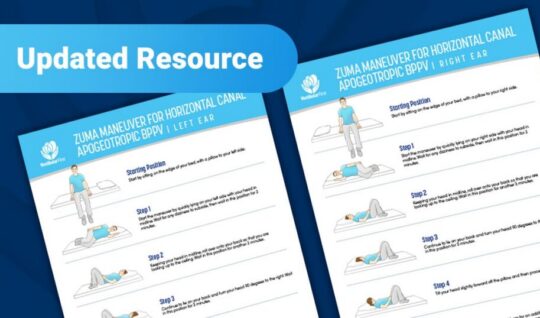
Looking for a patient-friendly handout for at-home maneuvers? We created a free printable resource you can give to your patients. Download it today!
Related Pathology
Watch Related Journal Club
Sources
- Alvarez de Linera-Alperi M, Garaycochea O, Calavia D, Terrasa D, Pérez-Fernández N, Manrique-Huarte R. Apogeotropic Horizontal Canal Benign Paroxysmal Positional Vertigo: Zuma e Maia Maneuver versus Appiani Variant of Gufoni. Audiol Res. 2022 Jun 19;12(3):337-346. doi: 10.3390/audiolres12030035. PMID: 35735368; PMCID: PMC9220154. https://pubmed.ncbi.nlm.nih.gov/35735368/
- Bhandari, A., Bhandari, R., Kingma, H., Zuma e Maia, F., & Strupp, M. (2021). Three‐dimensional simulations of six treatment maneuvers for horizontal canal benign paroxysmal positional vertigo canalithiasis. European Journal of Neurology, 28(12), 4178–4183. https://doi.org/10.1111/ene.15044 https://pubmed.ncbi.nlm.nih.gov/34339551/
- Correia F, Castelhano L, Cavilhas P, Escada P. Lateral semicircular canal-BPPV: Prospective randomized study on the efficacy of four repositioning maneuvers. Acta Otorrinolaringol Esp (Engl Ed). 2022 Jan-Feb;73(1):27-34. doi: 10.1016/j.otoeng.2020.11.002. PMID: 35190085. https://pubmed.ncbi.nlm.nih.gov/35190085/
- Ramos BF, Cal R, Brock CM, Mangabeira Albernaz PL, Zuma e Maia F. Apogeotropic variant of horizontal semicircular canal benign paroxysmal positional vertigo: Where are the particles? Audiol Res. 2019 Aug 29;9(2):228. doi: 10.4081/audiores.2019.228. PMID: 31579489; PMCID: PMC6766685. https://pubmed.ncbi.nlm.nih.gov/31579489/
- Zuma e Maia F, Ramos BF, Cal R, Brock CM, Mangabeira Albernaz PL and Strupp M (2020) Management of Lateral Semicircular Canal Benign Paroxysmal Positional Vertigo. Front. Neurol. 11:1040. doi: 10.3389/fneur.2020.01040 https://www.frontiersin.org/journals/neurology/articles/10.3389/fneur.2020.01040/full