
Posterior Cupulolithiasis BPPV
Definition
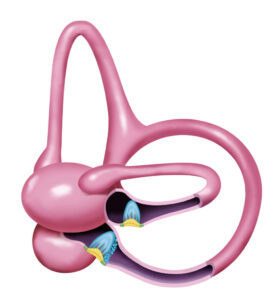
Posterior cupulolithiasis BPPV (Benign Paroxysmal Positional Vertigo) is a less common variant of BPPV resulting from otoconia dislodged from the utricle that become adhered to the cupula of the posterior semicircular canal. This increases the cupula’s specific gravity, causing it to respond abnormally to changes in head position.
Unlike posterior canalithiasis, where free-floating debris induces transient endolymph flow, cupulolithiasis creates a sustained deflection of the cupula, leading to prolonged excitation or inhibition of the affected canal. This produces up-beating torsional nystagmus > 60 sec, typically without latency or fatigability, during positional testing such as the Dix-Hallpike test or Side-lying test.

Clinical Findings
- Persistent Upbeating Torsional Nystagmus: Positional tests elicit persistent (>60 seconds) upbeating and torsional nystagmus directed toward the affected side. A lack of latency and fatigability is typically observed, serving as a feature distinguishing posterior cupulolithiasis from canalithiasis, where nystagmus is brief and typically shows latency.
-
Postural Instability, especially with eyes closed or head turns
-
Oculomotor Examination
-
Abnormal Head Impulse Test (HIT) – could be abnormal if BPPV started with concurrent acute unilateral vestibular hypofunction, otherwise typically negative
-
An example of nystagmus consistent with right posterior cupulolithiasis BPPV (right torsional upbeating lasting > 1 min)
Tests

Treatment Maneuvers
Patient Focused Treatment Handouts (PDFs)
Research Highlights
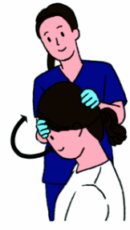
- Recent evidence by suggests that posterior cupulolithiasis, which is often resistant to standard repositioning maneuvers, may respond to adjunctive mechanical techniques. A 2025 randomized controlled trial by Oh et al., demonstrated that head-shaking maneuvers significantly improved symptom resolution (37.7% within one day) compared to sham treatment (13.2%), while mastoid oscillation showed intermediate efficacy (26.4%). These findings support incorporating head-shaking as an option to enhance treatment outcomes in difficult posterior cupulolithiasis cases.
- Cupulolithiasis often requires more repositioning attempts than canalithiasis—typically around 3 maneuvers—before resolution (Dorigueto et al., 2025). Persistent positional nystagmus and symptoms beyond this point should prompt further evaluation for central causes.
Want to learn more about BPPV? – Check out these resources
- Vestibular First: Online, Self-Paced CEU Courses for Clinicians. Course Bundles now available!
- Intro Courses
- Intermediate Courses
- Comprehensive list of Vestibular Education and Course Providers
- Vestibular Today Free Access Online BPPV Resources
- Balancing Act Rehabilitation: Understanding and Managing BPPV page
Sources
- Bhattacharyya, Neil, et al. “Clinical Practice Guideline: Benign Paroxysmal Positional Vertigo (Update).” Otolaryngology–Head and Neck Surgery, vol. 156, no. 3_suppl, 2017, pp. S1–S47. https://aao-hnsfjournals.onlinelibrary.wiley.com/doi/10.1177/0194599816689667
- Dorigueto RS, Ganança MM, Ganança FF. The number of procedures required to eliminate positioning nystagmus in benign paroxysmal positional vertigo. Braz J Otorhinolaryngol. 2005 Nov-Dec;71(6):769-75. doi: 10.1016/s1808-8694(15)31247-7. PMID: 16878247; PMCID: PMC9443588. https://pubmed.ncbi.nlm.nih.gov/16878247/
- Oh EH, Choi JH, Kim HS, Choi SY, Kim HA, Lee H, Moon IS, Park JY, Yoon BA, Kim SH, Kim JY, Kim HJ, Choi KD. Treatment Maneuvers in Cupulolithiasis of the Posterior Canal Benign Paroxysmal Positional Vertigo: A Randomized Clinical Trial. JAMA Netw Open. 2025 Mar 3;8(3):e250972. doi: 10.1001/jamanetworkopen.2025.0972. PMID: 40105844; PMCID: PMC11923721. https://pmc.ncbi.nlm.nih.gov/articles/PMC11923721/?utm_source
- von Brevern M, Bertholon P, Brandt T, Fife T, Imai T, Nuti D, Newman-Toker D. Benign paroxysmal positional vertigo: Diagnostic criteria. J Vestib Res. 2015;25(3-4):105-17. doi: 10.3233/VES-150553. PMID: 26756126. https://pubmed.ncbi.nlm.nih.gov/26756126/