
Li Maneuver for Posterior Canalithiasis
Description
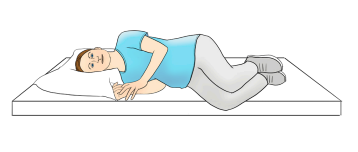
The Li maneuver is a canalith repositioning technique used to treat posterior canalithiasis benign paroxysmal positional vertigo (BPPV), particularly in patients who do not respond to traditional maneuvers like the Epley or Semont. Though not yet widely included in clinical guidelines, the Li maneuver provides an additional option for managing posterior canal BPPV. Its advantages include simplicity and suitability for patients with cervical spine limitations, though proper execution requires rapid movement, which may be challenging in patients with poor mobility.
Effectiveness
The maneuver has shown effectiveness comparable to the Epley for posterior canal BPPV. In a randomized trial of 113 patients by Li et al. (2017), 62.5% were symptom-free at 3 days and 87.5% at 1 week, similar to the Epley group (59.6% and 91.2%). No cases of canal conversion occurred with the Li maneuver, while one patient (1.8%) in the Epley group experienced conversion.
History
The treatment was introduced in 2010 by otolaryngologist Dr. Jinrang Li as a modification of the Semont maneuver for posterior canal BPPV. By eliminating the need for cervical rotation and extension and instead using a rapid 180° roll in the coronal plane, it was designed to simplify treatment. The randomized clinical trial in 2017 confirmed it as a safe and effective alternative to the Epley maneuver.
Instructions
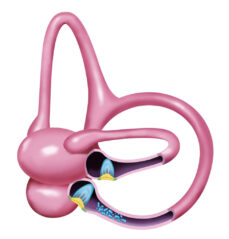
The purpose of the Li maneuver is to reposition displaced otoconia from the posterior semicircular canal back into the utricle in patients with posterior canalithiasis BPPV.
Right Ear
- Explain the procedure to the patient and obtain consent.
- Quickly lie down to the right side, keeping the head at midline and resting it on the bed or a flat pillow. Stay in this position for 1 minute after dizziness subsides.
- Quickly sit up, dropping feet off the side of the bed, and immediately lie down on the left side, keeping the head at midline. Stay in this position for 4 minutes.
- Rapidly return to a seated position on the side of the bed, keeping the head in midline.
Left Ear
- Explain the procedure to the patient and obtain consent.
- Quickly lie down to the left side, keeping the head at midline and resting it on the bed or a flat pillow. Stay in this position for 1 minute after dizziness subsides.
- Quickly sit up, dropping feet off the side of the bed, and immediately lie down on the right side, keeping the head at midline. Stay in this position for 4 minutes.
- Rapidly return to a seated position on the side of the bed, keeping the head in midline.
Patient Focused Handouts (PDFs)

Left ear

Related Pathology
Sources
- Li J, Li H. New repositioning techniques for benign paroxysmal positional vertigo: the Li repositioning manoeuvres. J Laryngol Otol. 2010 Aug;124(8):905-8. doi: 10.1017/S0022215109992520. Epub 2010 Jan 6. PMID: 20053308. https://pubmed.ncbi.nlm.nih.gov/20053308/
- Li J, Tian S, Zou S. Efficacy of the Li maneuver in treating posterior canal benign paroxysmal positional vertigo. Acta Otolaryngol. 2017 Jun;137(6):588-592. doi: 10.1080/00016489.2016.1258731. Epub 2016 Dec 6. PMID: 27921448. https://pubmed.ncbi.nlm.nih.gov/27921448/