
Rapid Bilateral Sitting-Up Maneuver
Description
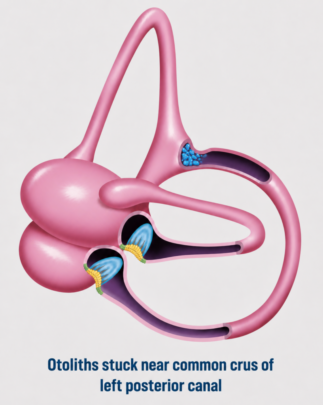
The Rapid Bilateral Sitting-Up Maneuver is a proposed treatment for apogeotropic posterior-canal BPPV attributed in this article to otoconia trapped in the superior short arm of the posterior canal.
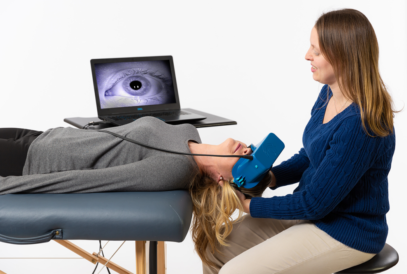
Testing may show upbeat-torsional “sitting-up nystagmus” when returning to sitting from one or both Dix–Hallpike positions; in the article’s example, right torsional upbeat nystagmus suggested a left posterior-canal jam. Downbeat nystagmus may or may not be present during the Dix–Hallpike test.
The maneuver may be useful when the affected side is unclear or other maneuvers have not worked. The patient is moved rapidly from each Dix–Hallpike position back to sitting to help return the otoconia to the utricle. Because the movement is fast, some patients may not tolerate it, and evidence is currently limited to two reported cases (Alsarhan, 2025).
Effectiveness
History
The treatment was developed by Dr. Haider Wahab Alsarhan and first published in 2025. Based on a digital inner-ear model, the maneuver uses rapid sitting up from both Dix–Hallpike positions to help move the trapped otoconia toward the utricle.

Instructions
The purpose is to move otoconia trapped near the common crus of the posterior canal back into the utricle in apogeotropic posterior-canal BPPV.
Steps
- Begin with the patient sitting upright on the treatment table.
- Move the patient into either the right or left Dix–Hallpike position. The starting side does not matter. One clinician should assist and guard the patient if possible.
- Maintain the Dix–Hallpike position until the vertigo and nystagmus stop, then remain in the position for an additional 30 seconds.
- Rapidly bring the patient back to sitting upright.
- Keep the patient sitting until the vertigo and nystagmus stop, then wait an additional 30 seconds.
- Move the patient into the Dix–Hallpike position on the opposite side.
- Again, hold until the vertigo and nystagmus stop, followed by an additional 30 seconds.
- Rapidly bring the patient back to sitting upright and remain there until symptoms stop, followed by an additional 30 seconds.
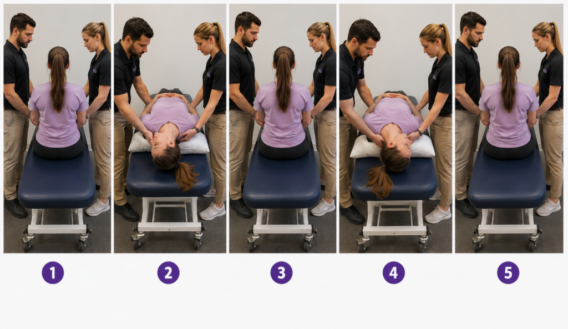
The rapid transitions apply specifically when returning from each Dix–Hallpike position to sitting; the paper does not state that the movements into the Dix–Hallpike positions must be rapid.
Related Pathology
Sources
Alsarhan HW. New treatment strategy for apogeotropic posterior canal benign paroxysmal positional vertigo. Hearing, Balance and Communication. 2025;23(3):99-105. doi:10.4103/HBC.HBC_12_25.