
Gufoni Maneuver for Horizontal Cupulolithiasis
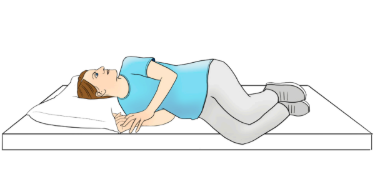
Description
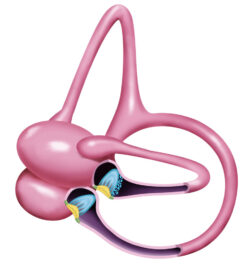
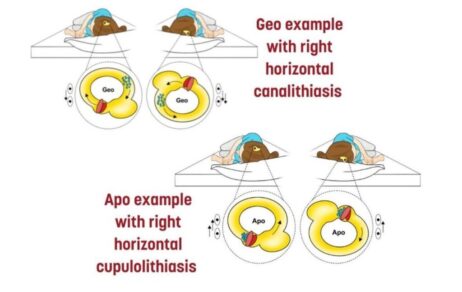
The Gufoni maneuver, also known as the modified Gufoni or Gufoni-Appiani maneuver, for horizontal cupulolithiasis benign paroxysmal positional vertigo (BPPV) is a positional treatment designed to dislodge otoconia thought to have adhered to the cupula of the horizontal semicircular canal. By using gravity and rapid positional changes, the maneuver aims to free the attached debris from the cupula and promote its return toward the utricle, reducing the abnormal stimulation that causes vertigo/dizziness and nystagmus.
Effectiveness
The effectiveness of the Gufoni maneuver for apogeotropic horizontal canal BPPV remains debated. A systematic review by Kinne et al. (2023) reported that the Gufoni, Zuma, and Cupulolith Repositioning maneuvers each achieved 100% resolution in individual studies after a single session, with Gufoni highlighted as the most practical first choice due to stronger evidence and better tolerability in mobility-limited patients. Correia et al. (2021) found that the Gufoni-Appiani variant achieved higher short-term success (71.4%) compared to the barbecue roll and Zuma-e-Maia maneuvers (both 33.3%). In contrast, Lee et al. (2021) observed no immediate resolution in nine patients treated with Gufoni (head down variation), whereas 25% responded to Appiani (head up variation); most improvements occurred later, likely reflecting spontaneous resolution or differing pathophysiologic mechanisms. Taken together, these findings suggest that while Gufoni has been studied and often recommended as a first-line option, its immediate effectiveness in horizontal cupulolithiasis is inconsistent, and outcomes may depend on patient factors, maneuver variants, and underlying pathology.
History
The Gufoni maneuver was first introduced in 1998 by Italian otolaryngologist Mario Gufoni and colleagues as a new treatment option for horizontal canal BPPV, at a time when most repositioning techniques, such as the Epley and Semont, were designed for posterior canal cases. Horizontal canal involvement had only recently been recognized as a distinct variant, and the available treatment (the Lempert “Barbecue” roll, 1994) was effective but more cumbersome, requiring multiple rotations.
The maneuver was initially described in Italian literature in 1998, but it did not reach a broader international audience until 2001, when Ciniglio Appiani and colleagues published the first English-language description. This dissemination established the Gufoni maneuver as an important addition to the clinician’s toolkit.
Instructions
The purpose of the maneuver is to treat horizontal canal BPPV (cupulolithiasis, apogeotropic variant) by detaching otoconia from the cupula of the horizontal semicircular canal and guiding them back toward the utricle, thereby resolving symptoms and nystagmus.
Right Ear
- Explain the procedure to the patient and obtain consent.
- Have the patient sit on the edge of the table or bed.
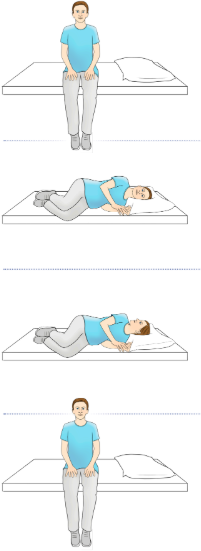
- Quickly lie the patient down on the right side. The patient’s head should be parallel to the floor and looking straight ahead and their legs should be lifted up onto the bed. Hold this position for 30 sec.
- Quickly turn the head up to the left so that the nose is pointed up towards the ceiling. Hold this position 1-2 min.
- In another variation the patient’s head is quickly turned toward the ground 45°-60° instead of up towards the ceiling and held in that position for 1-2 minutes.
- Have the patient drop their legs off the side of the bed or table and slowly sit up to the starting position. Once they have returned to sitting, wait here for an additional 60 seconds before standing.
Left Ear
- Explain the procedure to the patient and obtain consent.
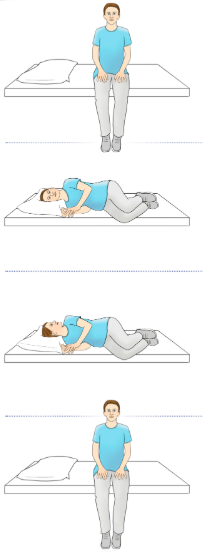
- Have the patient sit on the edge of the table or bed.
- Quickly lie the patient down on the left side. The patient’s head should be parallel to the floor and looking straight ahead and their legs should be lifted up onto the bed. Hold this position for 30 sec.
- Quickly turn the head up to the right so that the nose is pointed up towards the ceiling. Hold this position 1-2 min.
- In another variation the patient’s head is quickly turned toward the ground 45°-60° instead of up towards the ceiling and held in that position for 1-2 minutes.
- Have the patient drop their legs off the side of the bed or table and slowly sit up to the starting position. Once they have returned to sitting, wait here for an additional 60 seconds before standing.
Patient Focused Handouts (PDFs)
Left ear
Related Pathology
Sources
- Bhattacharyya N, Gubbels SP, Schwartz SR, Edlow JA, El-Kashlan H, Fife T, Holmberg JM, Mahoney K, Hollingsworth DB, Roberts R, Seidman MD, Steiner RW, Do BT, Voelker CC, Waguespack RW, Corrigan MD. Clinical Practice Guideline: Benign Paroxysmal Positional Vertigo (Update). Otolaryngol Head Neck Surg. 2017 Mar;156(3_suppl):S1-S47. doi: 10.1177/0194599816689667. PMID: 28248609. https://pubmed.ncbi.nlm.nih.gov/28248609/
- Correia F, Castelhano L, Cavilhas P, Escada P. Lateral semicircular canal-BPPV: Prospective randomized study on the efficacy of four repositioning maneuvers. Acta Otorrinolaringol Esp (Engl Ed). 2021 Jan 22:S0001-6519(20)30198-9. English, Spanish. doi: 10.1016/j.otorri.2020.11.003. Epub ahead of print. PMID: 33494876. https://pubmed.ncbi.nlm.nih.gov/33494876/
- Gufoni M, Mastrosimone L, Di Nasso F. Trattamento con manovra di riposizionamento per la canalolitiasi orizzontale [Repositioning maneuver in benign paroxysmal vertigo of horizontal semicircular canal]. Acta Otorhinolaryngol Ital. 1998 Dec;18(6):363-7. Italian. PMID: 10388148. https://pubmed.ncbi.nlm.nih.gov/10388148/
- Kinne, B. L., Breuer, R. E., Fitkin, O. M., & Kelly, R. L. (2023). Interventions for apogeotropic horizontal canal benign paroxysmal positional vertigo: a systematic review. Physical Therapy Reviews, 28(1), 30–38. https://doi.org/10.1080/10833196.2022.2163082 https://www.tandfonline.com/doi/abs/10.1080/10833196.2022.2163082
- Lee J, Lee DH, Noh H, Shin JE, Kim CH. Immediate and short-term effects of Gufoni and Appiani liberatory maneuver for treatment of ageotropic horizontal canal benign paroxysmal positional vertigo: A prospective randomized trial. Laryngoscope Investig Otolaryngol. 2021 Jul 7;6(4):832-838. doi: 10.1002/lio2.600. PMID: 34401509; PMCID: PMC8356861. https://pubmed.ncbi.nlm.nih.gov/34401509/