
Semont Maneuver
Description
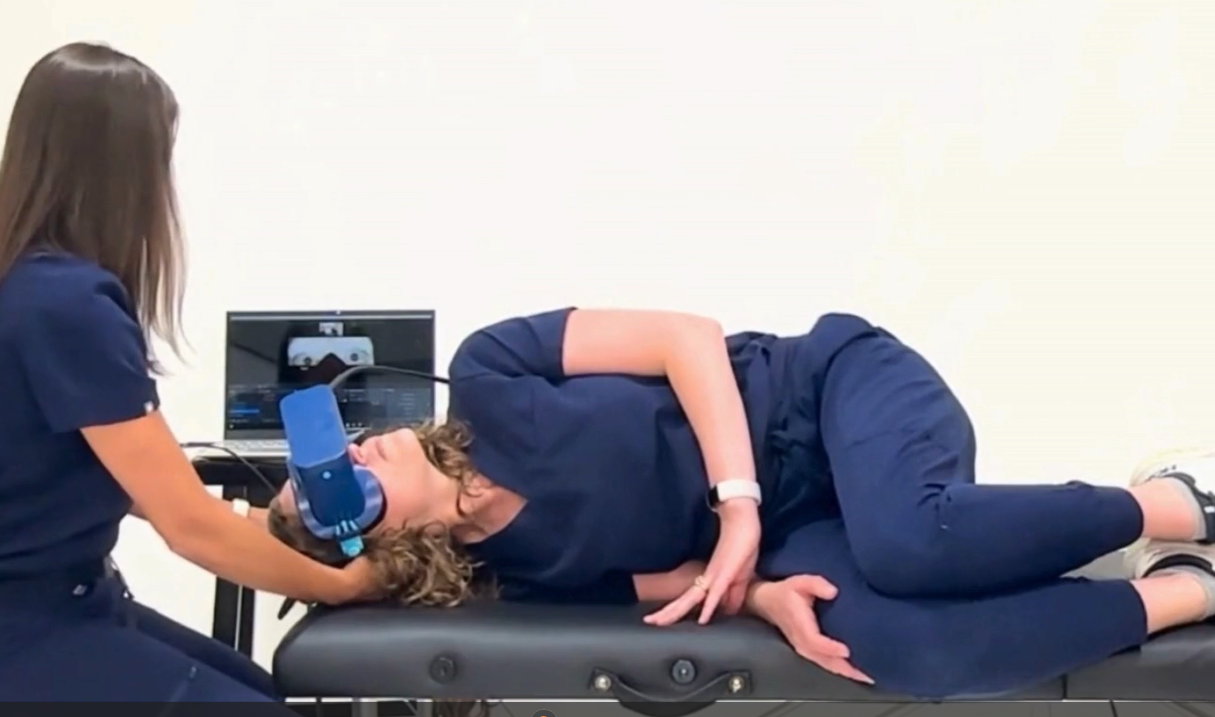
The Semont maneuver, also known as the liberatory maneuver, is a canalith repositioning technique used primarily for posterior cupulolithiasis benign paroxysmal positional vertigo (BPPV) and in some cases of posterior canalithiasis. Unlike the Epley, which relies on slow, gravity-assisted repositioning, the Semont uses rapid side-to-side head–body movements to generate inertial forces thought to dislodge otoconia adhered to the cupula or trapped near the ampulla, allowing them to move into the utricle.
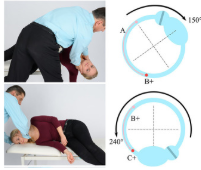
During the treatment, the patient’s head is turned 45° away from the affected side before being moved quickly to side-lying on the affected side, held for ~1–2 minutes, then rapidly moved to the opposite side without changing head position, held again, and returned to sitting.
Effectiveness
The Semont maneuver is an effective treatment for posterior canal BPPV, with over 90% of patients achieving symptom resolution within four maneuvers and 83.5% after only two (Levrat et al., 2003). For cases unresponsive to an initial Epley, switching to Semont offers similar success to repeating the Epley (Oh et al., 2017). Compared with Epley, Semont may have a slightly lower risk of canal conversion, which could make it preferable for selected home treatment scenarios (Anagnostou et al., 2014).
A modified Semont Plus version, incorporating increased cervical extension when lying on the affected side, has been shown to shorten recovery time compared to standard Semont or Epley when repeated self-maneuvers are performed (Strupp et al., 2021). In a 2024 study comparing Epley, Semont, and Gans maneuvers, all achieved similar overall efficacy, with most patients improving after a single attempt; however, Epley had a slightly higher immediate success rate (86.7% vs 80% for Semont) and required fewer total attempts for resolution, while 30-day recurrence was 27.3% for Epley and 36.4% for Semont.
History
The Semont maneuver was introduced in 1988 by French physiotherapist Dr. Alain Semont, who also coined the term “vestibular rehabilitation“. It was inspired by his observation of a patient who recovered immediately after a sudden lateral fall during a vertigo episode. Dr. Semont developed a brisk side-to-side movement sequence to dislodge otoconia from the posterior canal cupula and move them into the utricle. Replacing earlier habituation methods like the Brandt–Daroff exercises (1980), the Semont marked a shift toward canal-specific repositioning techniques and preceded the introduction of the Epley maneuver in 1992. Variations continue to emerge, including the Semont-Plus maneuver, which incorporates increased cervical extension to enhance treatment effectiveness.
Instructions
The purpose of the treatment is to rapidly reposition displaced otoconia from the posterior semicircular canal back into the utricle, thereby resolving BPPV symptoms and nystagmus.
Right Ear
- Explain the procedure to the patient and obtain consent.
- Start with the patient sitting on the edge of the bed or mat table with the head turned 45 deg towards the left.
- Quickly move the patient into the right side-lying position, with the head turned up. Keep the patient in this position until at least 20 seconds after all nystagmus has stopped (~1-2 min).
- Move quickly all the way over to left side-lying position side (do not change head position and nose is now down toward table). Hold ~ 1-2 min.
- At a normal or slow rate, bring the patient back up to the sitting position.
Left Ear
- Explain the procedure to the patient and obtain consent.
- Start with the patient sitting on the edge of the bed or mat table with the head turned 45 deg towards the right.
- Quickly move the patient into the left side-lying position, with the head turned up. Keep the patient in this position until at least 20 seconds after all nystagmus has stopped (~1-2 min).
- Move quickly all the way over to right side-lying position side (do not change head position and nose is now down toward table). Hold ~ 1-2 min.
- At a normal or slow rate, bring the patient back up to the sitting position.
Patient Focused Handouts (PDFs)
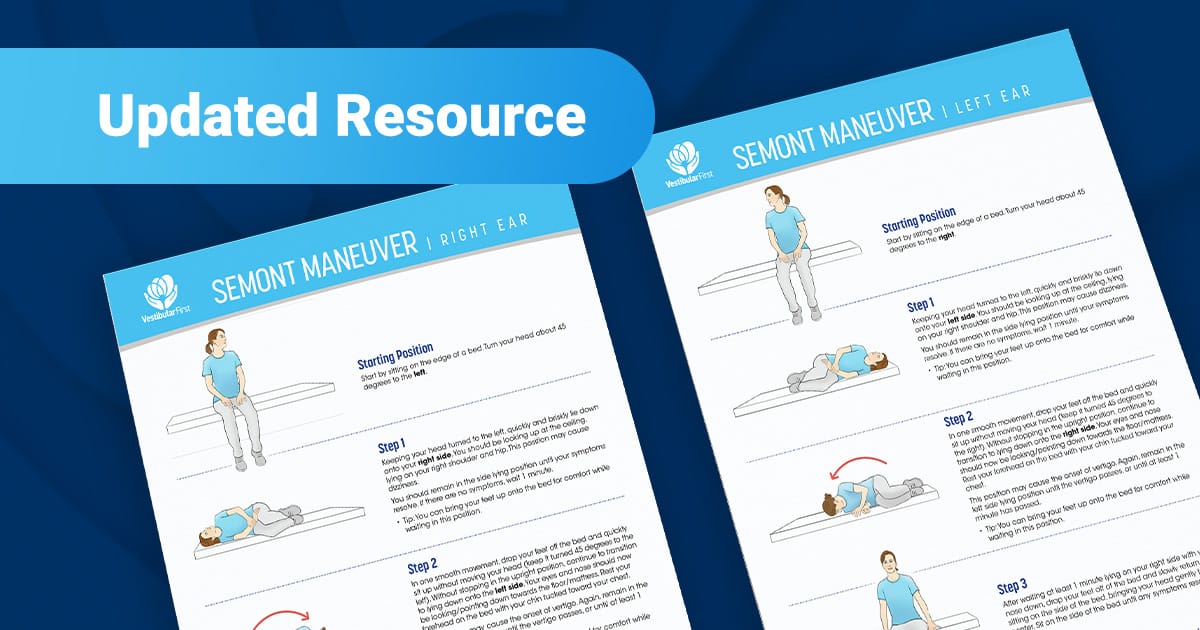
Looking for a patient-friendly handout for an at-home maneuver? We created a free printable resource you can give to your patients. Download it today!
Related Pathology
Sources
- Anagnostou E, Stamboulis E, Kararizou E. Canal conversion after repositioning procedures: comparison of Semont and Epley maneuver. J Neurol. 2014 May;261(5):866-9. doi: 10.1007/s00415-014-7290-2. Epub 2014 Feb 26. PMID: 24570284. https://pubmed.ncbi.nlm.nih.gov/24570284/
- Bhattacharyya N, Gubbels SP, Schwartz SR, Edlow JA, El-Kashlan H, Fife T, Holmberg JM, Mahoney K, Hollingsworth DB, Roberts R, Seidman MD, Steiner RW, Do BT, Voelker CC, Waguespack RW, Corrigan MD. Clinical Practice Guideline: Benign Paroxysmal Positional Vertigo (Update). Otolaryngol Head Neck Surg. 2017 Mar;156(3_suppl):S1-S47. doi: 10.1177/0194599816689667. PMID: 28248609. https://pubmed.ncbi.nlm.nih.gov/28248609/
- Levrat E, van Melle G, Monnier P, Maire R. Efficacy of the Semont maneuver in benign paroxysmal positional vertigo. Arch Otolaryngol Head Neck Surg. 2003 Jun;129(6):629-33. doi: 10.1001/archotol.129.6.629. PMID: 12810466. https://pubmed.ncbi.nlm.nih.gov/12810466/
- Nadagoud SV, Bhat VS, Pragathi BS. Comparative Efficacy of Epley, Semont and Gans Maneuver in Treating Posterior Canal Benign Paroxysmal Positional Vertigo. Indian J Otolaryngol Head Neck Surg. 2024 Feb;76(1):48-54. doi: 10.1007/s12070-023-04071-y. Epub 2023 Jul 25. PMID: 38440539; PMCID: PMC10908675. https://pubmed.ncbi.nlm.nih.gov/38440539/
- Oh SY, Kim JS, Choi KD, Park JY, Jeong SH, Lee SH, Lee HS, Yang TH, Kim HJ. Switch to Semont maneuver is no better than repetition of Epley maneuver in treating refractory BPPV. J Neurol. 2017 Sep;264(9):1892-1898. doi: 10.1007/s00415-017-8580-2. Epub 2017 Jul 28. PMID: 28755307. https://pubmed.ncbi.nlm.nih.gov/28755307/
- Strupp M, Goldschagg N, Vinck AS, Bayer O, Vandenbroeck S, Salerni L, Hennig A, Obrist D, Mandalà M. BPPV: Comparison of the SémontPLUS With the Sémont Maneuver: A Prospective Randomized Trial. Front Neurol. 2021 Apr 14;12:652573. doi: 10.3389/fneur.2021.652573. PMID: 33935951; PMCID: PMC8079727. https://pubmed.ncbi.nlm.nih.gov/33935951/