
Demi Semont
Description
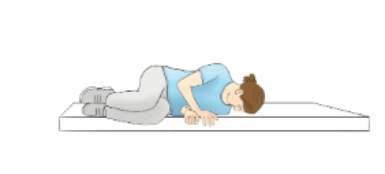
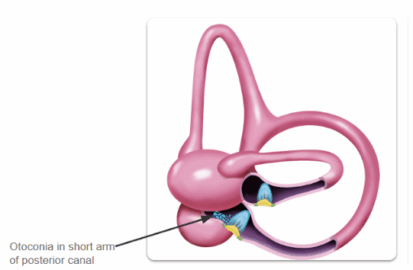
The Demi Semont maneuver is a liberatory technique for the apogeotropic variant of posterior canal BPPV that is thought to shift otoconia from the non-ampullary arm of the posterior canal toward the utricle. In short-arm posterior canalithiasis, it may be possible to move otoconia into the long arm of the canal, where a modified Epley or Semont maneuver can then effectively clear it.
Effectiveness
The treatment is effective in about 70–87% of patients with apogeotropic posterior canal BPPV, either resolving symptoms or converting the variant into the typical geotropic form that can then be treated with standard maneuvers (Vannucchi et al., 2015) (Asprella-Libonati & Pecci, 2019)
History
Dr. Giacinto Asprella-Libonati
The Demi Semont maneuver was introduced by Dr. Giacinto Asprella-Libonati after he recognized that some patients with torsional down-beating nystagmus were being misdiagnosed as anterior canal BPPV, when in fact they had otoconia trapped in the short arm of the posterior canal. To address this newly defined variant, he adapted the Semont maneuver into a “half-maneuver” (hence demi-Semont).
Instructions
The purpose is to reposition otoconia in apogeotropic posterior canal BPPV so they can be cleared from the canal or converted into a typical geotropic form treatable with standard maneuvers.
Right Ear
- Explain the procedure to the patient and obtain consent.
- Start seated on the edge of the table or bed.
- Turn the head 45 deg towards the left.
- Gently lie the patient down on the left side. Hold 20-30 sec.
- Quickly return to sit, maintaining head rotation, then tilting the head back into mild extension.
- Allow symptoms to resolve.
- Repeat the sequence of movements starting at step 2, so that a total of 5 or more repetitions are performed.
Left Ear
- Explain the procedure to the patient and obtain consent.
- Start seated on the edge of the table or bed.
- Turn the head 45 deg towards the right.
- Gently lie the patient down on the right side, maintaining head rotation. Hold 20-30 sec.
- Quickly return to sit, maintaining head rotation, then tilting the head back into mild extension.
- Allow symptoms to resolve.
- Repeat the sequence of movements starting at step 2, so that a total of 5 or more repetitions are performed.
Related Pathology
Sources
- Asprella-Libonati G, Pecci R. Apogeotropic variant of posterior canal benign paroxysmal positional vertigo. B-ENT. 2019;15(2):119-125. https://www.researchgate.net/publication/334442597_Apogeotropic_variant_of_posterior_canal_benign_paroxysmal_positional_vertigo
- Vannucchi P, Pecci R, Giannoni B, Di Giustino F, Santimone R, Mengucci A. Apogeotropic Posterior Semicircular Canal Benign Paroxysmal Positional Vertigo: Some Clinical and Therapeutic Considerations. Audiol Res. 2015 Mar 31;5(1):130. doi: 10.4081/audiores.2015.130. PMID: 26557364; PMCID: PMC4627115. https://pmc.ncbi.nlm.nih.gov/articles/PMC4627115/